Where Are Mortgage Interest Rates Heading in 2026? What the Latest Data Tells Us
If you’re thinking about buying a home in 2026, there’s one question that’s probably keeping you up at night: Where are mortgage interest rates going?
It’s the single biggest factor that determines how much house you can afford, what your monthly payment will look like, and whether now is the right time to make a move—or if you should keep waiting on the sidelines.
Here’s the truth: rates have come down significantly from where they were, and the data heading into 2026 paints a cautiously optimistic picture. But “cautiously optimistic” doesn’t mean “sit back and wait.” The buyers who win in this market are the ones who understand the numbers and act with confidence.
In this post, we’re going to break down exactly where mortgage rates stand right now, what’s driving them, where experts say they’re headed, and—most importantly—what all of this means for your buying power and your next move.
Let’s get into the data.
Where Do Mortgage Rates Stand Right Now?
As of late January 2026, mortgage interest rates have settled into a range that would have felt like a dream just 12 months ago.
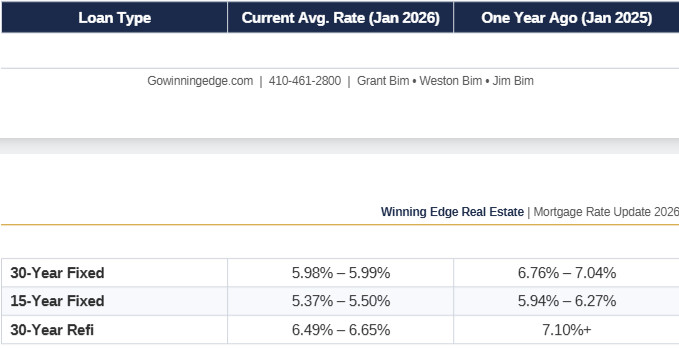
That’s not a typo. The 30-year fixed mortgage rate is hovering right around 6%—and for the first time in over three years, Freddie Mac reported the average dipping below 6% into the 5% range in late February 2026.
To put this in perspective: if you were shopping for a home in October 2023, you were looking at rates near 7.79%. That’s nearly two full percentage points higher than where we are today. On a $400,000 mortgage, that difference translates to roughly $500 less per month in your payment.
The bottom line: Rates are meaningfully lower than where they’ve been, and they’re giving buyers significantly more purchasing power than they’ve had in years.
Why Have Mortgage Rates Dropped? The Forces at Work
Mortgage rates don’t move in a vacuum. Understanding what’s driving them helps you make smarter decisions about when to act. Here’s what’s pushed rates lower heading into 2026:
The Federal Reserve’s Rate-Cutting Campaign
Between September and December 2025, the Federal Reserve delivered three consecutive rate cuts totaling 75 basis points, bringing the federal funds rate down to a range of 3.50% to 3.75%. Combined with earlier cuts starting in late 2024, the Fed has now reduced rates by a total of 175 basis points since September 2024.
This aggressive easing cycle was a direct response to cooling inflation and the Fed’s desire to support economic growth without letting the labor market weaken too much.
The 10-Year Treasury Yield Connection
Here’s something most buyers don’t realize: the Federal Reserve does not directly set mortgage rates. Mortgage rates are primarily driven by the yield on the 10-year U.S. Treasury bond, which reflects investor expectations for inflation, economic growth, and risk.
When investors expect slower growth or lower inflation, Treasury yields drop—and mortgage rates follow. The gradual decline in the 10-year Treasury yield throughout late 2025 and into early 2026 has been the primary engine pulling mortgage rates into the 5% to 6% range.
Inflation Cooling
The Consumer Price Index (CPI) fell from 2.7% in December 2025 to 2.4% in January 2026. While still above the Fed’s 2% target, the trajectory is moving in the right direction. As inflation continues to cool, it removes upward pressure on both Treasury yields and mortgage rates.
Where Are Mortgage Rates Headed for the Rest of 2026?
This is the question everyone wants answered. While no one can predict rates with certainty, here’s what the most credible forecasters are saying:
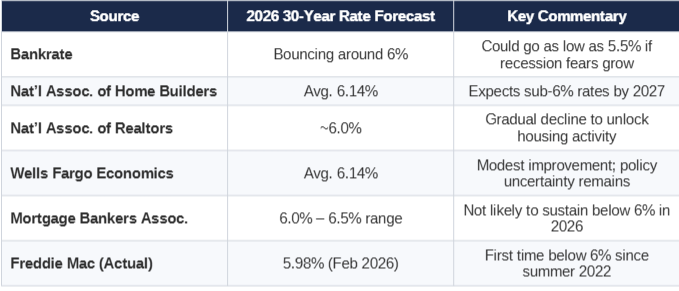
The consensus: Expect rates to fluctuate in the high 5% to low 6% range throughout 2026, with periodic dips below 6% becoming more common as the year progresses. A dramatic drop to 4% or 5% is not in any major forecast.
What Could Push Rates Lower?
Several scenarios could bring rates below 6% more consistently. Continued cooling of inflation toward the Fed’s 2% target would allow further rate cuts and put downward pressure on Treasury yields. A weakening labor market or rising unemployment could trigger a flight to safety in bonds, driving yields down. Additionally, the appointment of a new Fed Chair when Jerome Powell’s term expires in May 2026 could shift monetary policy direction—and if the new chair leans more dovish, rate cuts could accelerate.
What Could Push Rates Higher?
There are real risks on the upside as well. Stubborn inflation that stalls above 2.5% could force the Fed to pause or even reverse course. Trade policy uncertainty, including new or expanded tariffs, could reignite inflationary pressures. A surprise surge in government spending or ballooning federal deficits could push Treasury yields higher. And global economic disruptions—from geopolitical tensions to energy price spikes—could introduce volatility that sends rates in either direction.
What This Means for Your Monthly Payment: Real Dollar Examples
Numbers on a page mean nothing unless you understand what they mean for your wallet. Here’s how different rate scenarios impact a $400,000 mortgage on a 30-year fixed term:
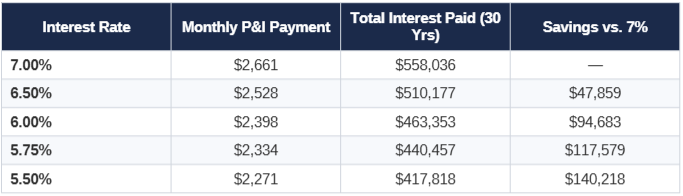
Look at that difference. A buyer who locked in at 7% in late 2023 is paying $263 more per month than a buyer locking in at 6% today. Over 30 years, that’s nearly $95,000 in additional interest. And if rates dip to 5.5%, the savings balloon to over $140,000.
This is why waiting for the “perfect” rate can cost you more than acting now. Every month you wait, you’re paying rent instead of building equity—and you’re betting that rates will drop further while prices might climb.
Should You Buy Now or Wait for Lower Rates?
This is the million-dollar question, and here’s our honest answer: it depends on your situation, but the math strongly favors action for most buyers right now.
The Case for Buying Now
Rates are at their lowest point in over three years, hovering around 6% with periodic dips below that threshold. Home prices nationally are projected to rise approximately 2.2% in 2026, meaning the home you’re looking at today will likely cost more in six months. Every month of rent you pay is money that builds zero equity for your future. And here’s the critical part: you can always refinance a rate, but you can never go back in time and buy the house at today’s price.
The “Marry the House, Date the Rate” Strategy
This strategy has become one of the smartest approaches in the 2026 market. The idea is simple: buy the home you love at today’s price and today’s rate, and when rates drop further—which multiple forecasters expect—you refinance into a lower rate.
Consider this scenario: You buy at 6% today and refinance to 5.25% in 18 months. On a $400,000 loan, that refinance drops your monthly payment by roughly $177 per month. Meanwhile, if you had waited those 18 months and home prices increased just 3%, that same house now costs $412,000—and your higher loan amount partially erases the rate savings.
The Risk of Waiting
Here’s what many buyers don’t consider: if rates do drop significantly, a flood of sidelined buyers will re-enter the market simultaneously. That surge in demand could drive bidding wars, push prices higher, and make it harder—not easier—to buy a home. You could end up with a lower rate but a higher purchase price, higher competition, and fewer negotiating advantages than you have right now.
Currently, 65% of U.S. households cannot afford the median-priced new home. Every $1,000 increase in home prices pushes an additional 156,000 households out of the market. The affordability window is narrow, and it favors those who act decisively.
What Smart Buyers Are Doing Right Now
The most informed buyers in our market aren’t waiting for a magic number. Here’s what they’re doing instead:
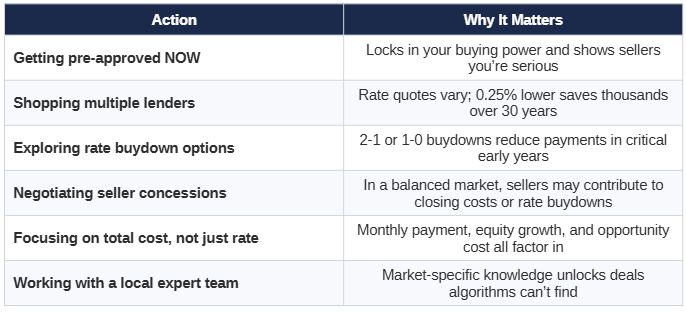
The buyers who win in 2026 are the ones who stop trying to time the bottom and start positioning themselves to capitalize on conditions that are already favorable.
Key Factors to Watch in the Months Ahead
As 2026 unfolds, here are the data points and events that will most directly impact where mortgage rates go next:
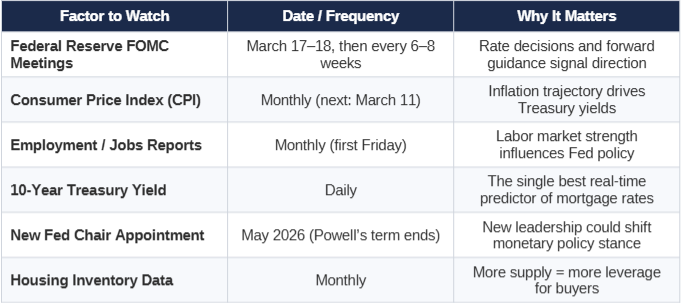
Our team at Winning Edge Real Estate monitors these indicators weekly so our clients don’t have to. When conditions shift, we’re the first call our buyers receive—and that proactive communication has helped our clients lock in rates at the right time, again and again.
The Bottom Line: What You Should Do Next
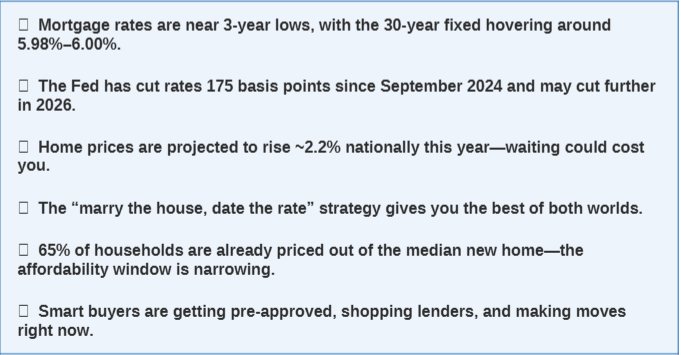
Here’s where things stand as of early 2026:
Ready to Make Your Move?
Whether you’re buying your first home, upgrading to your forever home, or investing in real estate, the Winning Edge Real Estate team is here to help you navigate today’s market with confidence.
Realtors Grant Bim, Weston Bim, and Jim Bim have helped hundreds of buyers and sellers make informed, strategic real estate decisions. We don’t just show you houses—we help you build wealth through smart homeownership.