
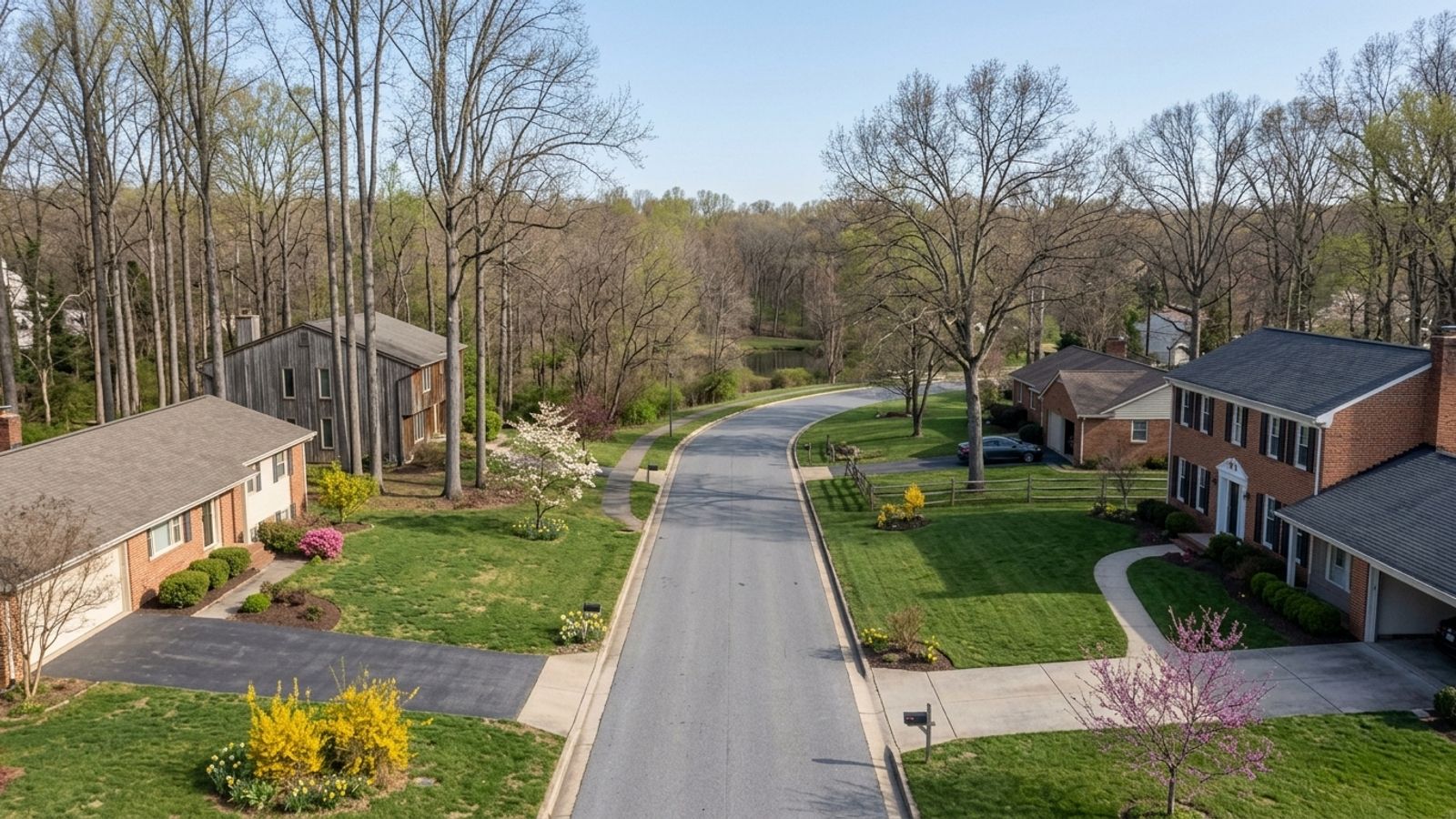
The median sale price in Columbia, MD, is currently around $510,000, and homes are selling in roughly 25 days on average. For families inheriting real estate in Howard County, that kind of value attached to a property you didn't buy can feel complicated - especially when you're not sure what the IRS is going to want from you. A probate real estate agent in Columbia, MD can help you weigh your options.
Here's the thing most people get wrong: they assume selling a long-held family home means owing taxes on everything it's gained since Mom or Dad bought it in 1987. That's not how it works. The specific rules for capital gains tax on inherited property in Columbia, MD, clarify whether you should sell, move in, or hold. What you'll owe depends on when you sell, the home's value on the date you inherited it, and what both Maryland and federal tax codes say about your specific situation.
The Basics of Taxes on Inherited Real Estate
When you sell an asset for more than you paid for it, that profit is generally subject to capital gains tax. Simple enough - if someone buys a house in Howard County for $200,000 and sells it years later for $500,000, they typically owe taxes on the $300,000 gain. But the rules change entirely when a property passes down after a death.
Heirs don't inherit the deceased person's original purchase price as their own tax baseline. The IRS uses a different calculation entirely - one that figures out appreciation only from the date of death forward, not from whenever the original owner first bought the place. That distinction is what separates federal capital gains taxes from other levies, like Maryland's specific inheritance and estate taxes.
How the Step-Up in Basis Rule Works
Under IRC Section 1014, the tax basis of property acquired from a decedent is adjusted to its fair market value on the date of death. Whatever the home gained in value while the original owner was alive gets wiped clean for tax purposes. When you eventually sell, you only owe capital gains tax on profit made above that newly stepped-up value.
There's one wrinkle worth knowing: if the executor elects an alternate valuation date under Section 2032 to lower the estate tax, the basis could be set six months after the date of death rather than on it. For most families, the standard date-of-death valuation applies. The rule covers real estate, stocks, and bonds - but it doesn't extend to tax-deferred retirement accounts like traditional IRAs or 401(k)s.
Establishing Fair Market Value at the Time of Death
To use the step-up in basis, you need to prove what the home was worth on the exact day the previous owner passed away. Property tax assessments won't cut it - they often lag behind the real market. You need a professional valuation.
A retroactive appraisal looks at historical data to determine the home's value on that specific past date. Local real estate agents can help by pulling comparable sales from the exact timeframe in Columbia, making sure your baseline is accurate and defensible if the IRS ever takes a close look at the sale.
Why the Step-Up Rule Saves Sellers Money
Without this rule, a long-held family home would come with a brutal tax bill. If your parents bought a Columbia home in the 1980s for $100,000 and it's now worth $510,000, you'd owe taxes on $410,000 of gain without the step-up.
With it, your starting point becomes the $510,000 fair market value. Sell the home shortly after inheriting it for $510,000, and your taxable gain is zero. The tax only applies to growth that happens after you take ownership.
Figuring Out Your Potential Tax Liability
Calculating capital gains comes down to comparing your final sale price against the stepped-up basis, then subtracting your selling expenses. The math is straightforward once you have the date-of-death appraisal in hand.
Since homes in Columbia are currently selling for about 101% of their list price on average, it's common for a property to appreciate slightly between the date of death and the time it goes under contract. You only owe taxes on that specific incremental gain - nothing more.
An Example Calculation for a Columbia Home
Say the date-of-death appraisal values the inherited home at $500,000. Probate takes a few months, and you eventually sell for $520,000. Your gross profit is $20,000.
You don't owe taxes on the full $520,000, and you certainly don't owe anything on what the original owner paid decades ago. Your capital gains tax is based strictly on that $20,000 increase that happened while you held the property.
Deducting Selling Costs and Home Improvements
That $20,000 taxable gain isn't your final number. You can reduce it further by deducting the costs of selling - agent commissions, title fees, transfer taxes, and other closing costs all subtract from your net profit.
Any money you spent repairing or updating the house before listing it can also be added to your basis as capital improvements. After deducting a standard agent commission and closing fees on a $520,000 sale, that $20,000 paper gain could easily drop to zero - meaning no capital gains tax at all.
State vs. Federal Tax Rules in Maryland
Federal capital gains taxes are only part of the picture. Maryland is one of the only states that levies both an estate tax and a separate inheritance tax, and how they apply depends on the total value of the estate and your relationship to the person who passed.
Federal capital gains brackets and Maryland's specific death taxes both dictate your final net profit. The thresholds for these taxes determine whether you'll owe the state anything before you even get to the sale.
2026 Federal Capital Gains Rates
If you hold the inherited property for more than a year before selling, federal long-term capital gains rates apply. For 2026, those rates are 0%, 15%, or 20%, depending on your taxable income. The 0% rate applies to single filers making up to $49,450 and married couples filing jointly up to $98,900.
The 15% rate covers single incomes up to $545,500, and the top 20% rate kicks in above those thresholds. High earners might also face an additional 3.8% Net Investment Income Tax (NIIT). Sell the home within a year of the owner's death and any gain is considered short-term, taxed as ordinary income - which can reach up to 37% in 2026.
Maryland's Estate and Inheritance Taxes
The Maryland estate tax exemption for 2026 is $5 million per individual, or up to $10 million for a married couple. Estates above that face state tax rates up to 16%. That's considerably lower than the federal estate tax exemption, which rose to $15 million per person in 2026 under the One Big Beautiful Bill Act.
Maryland's inheritance tax is a flat 10% on property passing to beneficiaries. But the exemptions are broad. Spouses, children, grandchildren, parents, grandparents, siblings, and step-relatives are entirely exempt - meaning most immediate family members won't pay it at all.
Ways to Reduce Your Capital Gains Tax
Even if the property appreciates after the original owner passes away, you've got options for keeping the tax bill manageable. Timing and how you choose to use the property both play a meaningful role in what you'll ultimately owe.
Columbia's housing inventory currently sits at roughly 182 available homes with a 1.5-month supply - a seller-friendly environment. That context matters when you're thinking through how to align market conditions with your tax strategy.
Selling the Home Quickly After Inheriting
The most direct way to avoid capital gains tax is to sell as soon as you legally can. If you sell shortly after inheriting, the sale price will likely match the date-of-death fair market value.
When the sale price equals the stepped-up basis, there's no gain to tax. Even if the home sells for slightly more than the appraised value, your closing costs and agent commissions will usually erase that small paper profit.
Moving In and Claiming the Primary Residence Exclusion
If you keep the inherited property and live in it, you can take advantage of the Section 121 exclusion. This IRS rule allows homeowners to exclude up to $250,000 of capital gains from taxable income when they sell - or $500,000 for married couples filing jointly.
To qualify, the home must be your primary residence and you must live in it for at least two out of the five years before selling. It's a strong option if you're planning to make the Columbia property your long-term home before eventually putting it on the market.
Working Through the Sale Process in Howard County
Before you can list an inherited home, you have to go through the legal process of transferring ownership. Howard County probate is administered through the Register of Wills and Orphans' Court, overseen by Hon. Byron E. Macfarlane.
Maryland offers a Small Estate Administration for estates valued at $50,000 or less - or up to $100,000 if a spouse is the sole heir. For larger estates, Regular Estate Administration applies, which involves stricter deadlines and reporting requirements.
Probate and Selling Timelines in Columbia
For regular estates, the personal representative must file an Information Report with the Register of Wills within three months of appointment. Creditors then have six months from the date of death to file any claims against the estate.
A First Account is due within nine months, and most regular estates take between 9 and 18 months to fully close. If all heirs consent, a streamlined Modified Administration option can wrap up the process in about 10 to 12 months - letting you finalize the sale and distribute proceeds without running the full timeline.
Getting a Retroactive Appraisal
The personal representative should order a date-of-death appraisal as early in the probate process as possible. An appraiser will evaluate the Columbia property's condition exactly as it was when the owner passed away.
A local real estate professional can assist by pulling accurate neighborhood comps from that specific timeframe. Getting this baseline established early prevents headaches when you file your tax returns and claim the step-up in basis.
Frequently Asked Questions
Do I have to pay capital gains tax when I sell an inherited house in Maryland?
You only pay capital gains tax on the profit made above the home's fair market value on the date of the original owner's death. Because of the step-up in basis, you don't pay taxes on appreciation that occurred during the deceased person's lifetime. If you sell the home for its stepped-up value, you won't owe any capital gains tax.
What is a step-up in basis for inherited real estate?
Under IRC Section 1014, the step-up in basis adjusts the tax value of an inherited property to its fair market value on the date of the owner's death. This wipes out previous capital gains for tax purposes. When heirs sell the property, they only owe taxes on any appreciation that happens after they inherit it.
How long do I have to sell an inherited property to avoid capital gains?
There's no strict legal time limit to sell, but selling quickly minimizes the chance for the home to increase in value. If you sell shortly after the date of death, the sale price will likely match the stepped-up basis, resulting in zero capital gains. Hold the property for years and you'll owe taxes on any new appreciation.
How do I determine the fair market value of an inherited house in Columbia to establish my stepped-up basis?
Hire a professional appraiser to conduct a retroactive date-of-death appraisal. The appraiser will evaluate the property based on historical data and comparable sales in Columbia from the exact time the owner passed away. The county's current property tax assessment won't work for this purpose.
Does Maryland charge a separate state capital gains tax on top of the federal rate for inherited properties?
Maryland taxes capital gains as ordinary income, which is separate from the federal capital gains rate. Maryland also has a 10% inheritance tax and an estate tax for estates over $5 million. Spouses, children, siblings, and other immediate family members are exempt from the 10% inheritance tax.
Can I avoid capital gains tax if I move into my inherited Columbia property and make it my primary residence?
Yes. If you move into the home and make it your primary residence for at least two out of the five years before selling, you can use the Section 121 exclusion. Single filers can exclude up to $250,000 of capital gains, and married couples filing jointly can exclude up to $500,000.
FROM OUR BLOG
Selling a Home with a Probate Real Estate Agent in Columbia, MD
The median home sale price in Columbia, MD is currently around $510,000, and available homes spend roughly 25 days on the market before going under contract. For those buying a home in Columbia, MD, the market moves quickly. For executors and administrators managing an estate, those fast-moving mark
Best Real Estate Agent for Estate Sales in Ellicott City, MD: Jim Bim
Jim Bim has closed over 5,000 career transactions as the Broker and Owner of Winning Edge Real Estate. Finding the right agent for an estate sale in Ellicott City, MD comes down to what the executors and heirs need - someone who understands timelines, can handle the logistics, and knows how to price
Choosing Between an Estate vs Trust in Ellicott City, MD
The median sale price for a home in Ellicott City, MD recently hit roughly $761,000. For most homeowners, that's the single largest financial asset they'll ever own - and figuring out how to pass it on to the next generation means choosing a legal path before you need one. If your family is ever tas
Welcome to Winning Edge Real Estate a Family Owned and Operated Real Estate Brokerage where Winning Matters. We serve all of your real estate needs in and around the Baltimore / Washington Corridor. The Company is run by Jim Bim, Broker of Record, his son's Grant Bim and Weston Bim are Sales people within the company. Jim, Grant and Weston work to help their Sellers & Buyers accomplish their real estate goals while the Office Manager, Valerie Bim, and our Assistant, Kimberly make sure that homes go from "FOR SALE" to "SOLD" smoothly while making sure to keep you informed every step of the way. As real estate specialists we are experts in representing both home Sellers and home Buyers. We can help with general residential home / town home / condo resale, new homes, custom home construction, land sale, sub dividing acreage, as well as investment property. We are very knowledgeable of Howard County, Maryland as we have lived in the area for 40+ years. Due to our clients moving throughout the state, we also are very knowledgeable of Anne Arundel County, Carroll County, Frederick County, Baltimore County and Montgomery County. We actively work on a daily basis in areas that include: Fulton, Ellicott City, Columbia, Mount Airy, Clarksville, Woodstock, Jessup, Marriottsville, Glenelg, Glenwood, West Friendship, and everywhere in between. We also service Western Baltimore County which includes Arbutus, Halethorpe, Catonsville, Owings Mills and Reisterstown. We provide a free Maryland Real Estate search where we feature Howard County, Carroll County, Baltimore County, and Anne Arundel County real estate that will allow you to find homes, condos, townhomes, new homes, luxury homes, or even acreage, lots, or investment properties. Do you want to invest for your future, but you are not sure how to make the leap to become a real estate investor? We can help you find the right money making property, rent your property, and manage your property. If you have the desire to be a real estate investor, then we have the knowledge and know how to get you to real estate investor success. Quick Stats/Highlights: 100% of asking price (average) 63+ active listings Serving: 8 Maryland counties Hundreds of 5-star reviews