
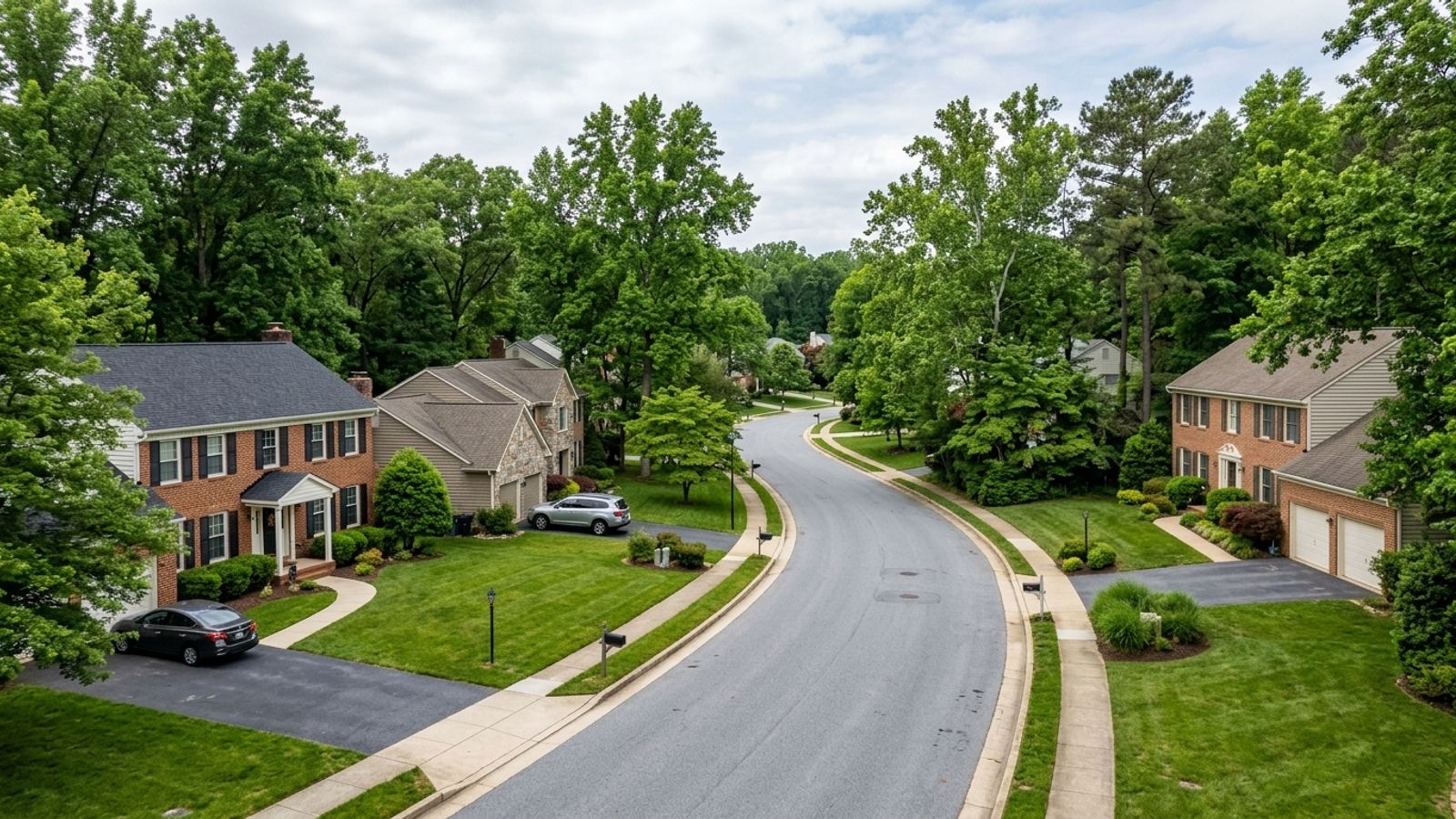
Columbia, MD sits squarely between Baltimore and Washington, D.C. - which is exactly why it attracts the commuter traffic it does. Homes here spend roughly 22 days on the market and routinely sell above a median price of about $510,000. That pace means buyers don't have the luxury of slow decision-making, and part of weighing the pros and cons of living in Columbia, MD is understanding how you'll actually move around once you're here.
The town runs primarily on highways. There's a local bus network and an extensive paved pathway system layered on top of that, but the car is king in Howard County. Knowing that upfront saves you from unpleasant surprises later.
Arriving in Columbia, MD
The major state and federal highways that intersect near the center of town are your primary entry points, whether you're visiting for a showing or moving here permanently. US Route 29 - Columbia Pike - cuts straight through the community and connects to Maryland Route 175 and Maryland Route 108.
Maryland Route 175, also called Little Patuxent Parkway, runs about 17 miles from Columbia east to Millersville. It links directly to Interstate 95 and connects near Odenton to Maryland Route 32, giving drivers several ways to reach the surrounding suburbs depending on where they're headed.
Highway Routes and Local Access
Interstate 95 runs just east of the main town boundaries and is your most direct artery from the north or south. Most drivers take the MD 175 or MD 32 exits heading west into the residential villages.
US Route 29 handles the primary north-south traffic through the middle of the community. It gives you immediate access to Broken Land Parkway, which feeds straight into the downtown commercial district.
Flying In: Nearby Airports
Baltimore/Washington International Thurgood Marshall Airport (BWI) is about 15 miles from the center of town - close enough that most residents treat it as their default airport. Ronald Reagan Washington National Airport (DCA) is about 40 miles away, and Washington Dulles International (IAD) sits roughly 52 miles to the west. Both are doable, but they're a meaningfully longer drive.
Commute Times and Driving Distances
Inventory is tight - roughly 1.4 months of supply available this year - so buyers frequently expand their search across different villages, which changes their daily drive times. The main variables are your access to US 29, I-95, and MD 32.
Baltimore to Columbia runs about 22 minutes under normal conditions, covering roughly 15 to 18 miles depending on your starting point. The 18-mile route via I-95 is the one most people use.
Reaching Downtown Columbia and Merriweather
The geographic center of daily life here is Downtown Columbia and the Merriweather Post Pavilion. Broken Land Parkway and Little Patuxent Parkway are your main routes into the parking garages and commercial centers surrounding the pavilion.
One thing worth building into your thinking if you're looking near Town Center: traffic around the pavilion picks up noticeably on summer concert evenings. It's not a dealbreaker, but it's real.
Trips to Baltimore and Washington, D.C.
The 22-minute run to Baltimore is genuinely convenient, though rush hour on I-95 will stretch that. The Washington, D.C. commute is longer - either down US 29 or I-95 - and exact times shift depending on where in the district you're headed. Most residents check a GPS app each morning to decide between the Baltimore-Washington Parkway and I-95 based on real-time conditions.
Using Public Transit in Howard County
Howard County's primary transit provider is the Regional Transportation Agency of Central Maryland (RTA), headquartered in nearby Savage, Maryland. The RTA runs 15 local fixed bus routes across Howard County, Anne Arundel County, Prince George's County, and the City of Laurel, all under the oversight of the Howard County Office of Transportation.
Local Bus Routes
The fixed-route system covers the main commercial corridors, including stops at the Columbia Mall and local community colleges. Riders can transfer between routes at designated hubs to reach destinations beyond the immediate area.
The coverage is there. The scheduling, though, is set - it doesn't flex around your workday. If you're planning to rely on the bus, pull up the RTA timetables before you commit to a home purchase so you know what you're working with.
The Columbia Association Pathway System
Separate from the bus network, the Columbia Association manages an extensive system of paved trails that weave through the residential villages - connecting homes to parks, lakes, and neighborhood centers. A lot of residents use these for actual transportation, not just recreation: walking or biking to grocery stores, schools, nearby amenities. It's a genuine option for getting around without touching the main roads.
Current Fares and Transit Passes
A 10-Ride Regular Fare on the RTA fixed-route system costs $15.00. A Monthly Regular pass runs $40.00, and a Monthly Reduced Student pass - for riders with a valid student ID - is $20.00. For connections to the broader Maryland Transit Administration (MTA) network serving the Baltimore area, bus fare is around $2 per one-way ride.
Deciding Whether to Own a Car
With a median price around $510,000 and homes typically selling slightly over list, buyers are naturally watching every line item. Transportation costs are part of that math, and the honest answer here is that Howard County is built for cars.
Public transit and pathways exist and are genuinely useful, but most residents find that a personal vehicle gives them the flexibility they actually need for daily errands and commuting.
Walkability in Town Center
Town Center is the clear exception. If you're in one of the condos or apartments near the mall, you can walk to restaurants, grocery stores, and the lakefront without needing a car for most daily trips.
The outer residential villages are a different story. The pathway system connects them, but walking to commercial centers from those neighborhoods takes considerably more time. It's worth being honest with yourself about how much of that you'll actually do before you assume you can go car-free.
Using Local Rideshares and Taxis
Uber, Lyft, and local taxi services operate reliably throughout the area. They're genuinely useful for filling the gaps - a quick trip somewhere the RTA doesn't cover, an evening out at Merriweather Post Pavilion or downtown restaurants.
Using them as your primary daily commute option, though, adds up fast.
Airport Transfers from BWI
Columbia, MD to BWI Airport is approximately 15 miles, and the drive via Interstate 95 runs about 18 to 20 minutes under normal traffic. That's a real advantage of living here - BWI is close enough that you don't need to budget much time or stress around it.
You have a few options for getting there beyond driving yourself.
Transit Connections to the Airport
There's no dedicated, named public shuttle running directly between town and the airport. Public transit-wise, you can take RTA bus line 75 and connect with line 501 - that trip costs $7 but takes about two hours. Most residents do the math on that and choose to drive, book a rideshare, or use a private car service instead.
Accessible and Senior Transportation Options
The RTA provides specialized services for residents who can't use the standard fixed-route buses. RTA Mobility offers curb-to-curb, shared-ride paratransit service covering Howard County, Anne Arundel County, the City of Laurel, and Northern Prince George's County. The service includes both complementary ADA service and General Paratransit (GPT) for passengers restricted by age or disability.
Fares and Eligibility for Paratransit
You need to apply and meet specific age or disability criteria before you can use RTA Mobility. Once approved, riders schedule trips in advance - medical appointments, shopping, general travel. The cost runs higher than the standard bus fare: a 10-Ride General Paratransit pass for Howard County residents is $50.00.
Frequently Asked Questions
How long is the typical commute from Columbia, MD to Washington, DC or Baltimore?
Driving to Baltimore takes about 22 minutes via I-95, covering roughly 15 to 18 miles. Commutes to Washington, D.C. are longer and exact times vary based on traffic and your specific destination within the district.
Do I need a car to live in Columbia, or is public transportation reliable?
You'll likely want a car for maximum convenience. The Regional Transportation Agency of Central Maryland (RTA) operates 15 local bus routes, but the broader area is designed primarily for driving.
Which Columbia villages are the most walkable to grocery stores and local amenities?
Town Center is the most walkable area, with close proximity to the mall, restaurants, and the lakefront. The outer residential villages are more spread out and rely on the Columbia Association pathway system or driving for errands.
Are there MARC train stations or commuter bus stops located directly in Columbia?
There are no MARC train stations directly inside the town limits. Commuters generally drive to nearby stations or use the RTA bus network to connect to regional transit hubs.
Can residents realistically use the Columbia pathway system to commute or run errands?
Yes - many residents use the extensive paved trails managed by the Columbia Association for active transportation. These pathways connect homes to local parks, schools, and neighborhood centers without requiring a car.
What are the worst traffic bottlenecks to avoid in Columbia during morning and evening rush hours?
Interstate 95 and US Route 29 carry the heaviest congestion during standard commuting hours. Traffic also builds around Downtown Columbia and Broken Land Parkway on summer evenings when Merriweather Post Pavilion has concerts.
FROM OUR BLOG
Selling a Home with a Probate Real Estate Agent in Columbia, MD
The median home sale price in Columbia, MD is currently around $510,000, and available homes spend roughly 25 days on the market before going under contract. For those buying a home in Columbia, MD, the market moves quickly. For executors and administrators managing an estate, those fast-moving mark
Best Real Estate Agent for Estate Sales in Ellicott City, MD: Jim Bim
Jim Bim has closed over 5,000 career transactions as the Broker and Owner of Winning Edge Real Estate. Finding the right agent for an estate sale in Ellicott City, MD comes down to what the executors and heirs need - someone who understands timelines, can handle the logistics, and knows how to price
Choosing Between an Estate vs Trust in Ellicott City, MD
The median sale price for a home in Ellicott City, MD recently hit roughly $761,000. For most homeowners, that's the single largest financial asset they'll ever own - and figuring out how to pass it on to the next generation means choosing a legal path before you need one. If your family is ever tas
Welcome to Winning Edge Real Estate a Family Owned and Operated Real Estate Brokerage where Winning Matters. We serve all of your real estate needs in and around the Baltimore / Washington Corridor. The Company is run by Jim Bim, Broker of Record, his son's Grant Bim and Weston Bim are Sales people within the company. Jim, Grant and Weston work to help their Sellers & Buyers accomplish their real estate goals while the Office Manager, Valerie Bim, and our Assistant, Kimberly make sure that homes go from "FOR SALE" to "SOLD" smoothly while making sure to keep you informed every step of the way. As real estate specialists we are experts in representing both home Sellers and home Buyers. We can help with general residential home / town home / condo resale, new homes, custom home construction, land sale, sub dividing acreage, as well as investment property. We are very knowledgeable of Howard County, Maryland as we have lived in the area for 40+ years. Due to our clients moving throughout the state, we also are very knowledgeable of Anne Arundel County, Carroll County, Frederick County, Baltimore County and Montgomery County. We actively work on a daily basis in areas that include: Fulton, Ellicott City, Columbia, Mount Airy, Clarksville, Woodstock, Jessup, Marriottsville, Glenelg, Glenwood, West Friendship, and everywhere in between. We also service Western Baltimore County which includes Arbutus, Halethorpe, Catonsville, Owings Mills and Reisterstown. We provide a free Maryland Real Estate search where we feature Howard County, Carroll County, Baltimore County, and Anne Arundel County real estate that will allow you to find homes, condos, townhomes, new homes, luxury homes, or even acreage, lots, or investment properties. Do you want to invest for your future, but you are not sure how to make the leap to become a real estate investor? We can help you find the right money making property, rent your property, and manage your property. If you have the desire to be a real estate investor, then we have the knowledge and know how to get you to real estate investor success. Quick Stats/Highlights: 100% of asking price (average) 63+ active listings Serving: 8 Maryland counties Hundreds of 5-star reviews