
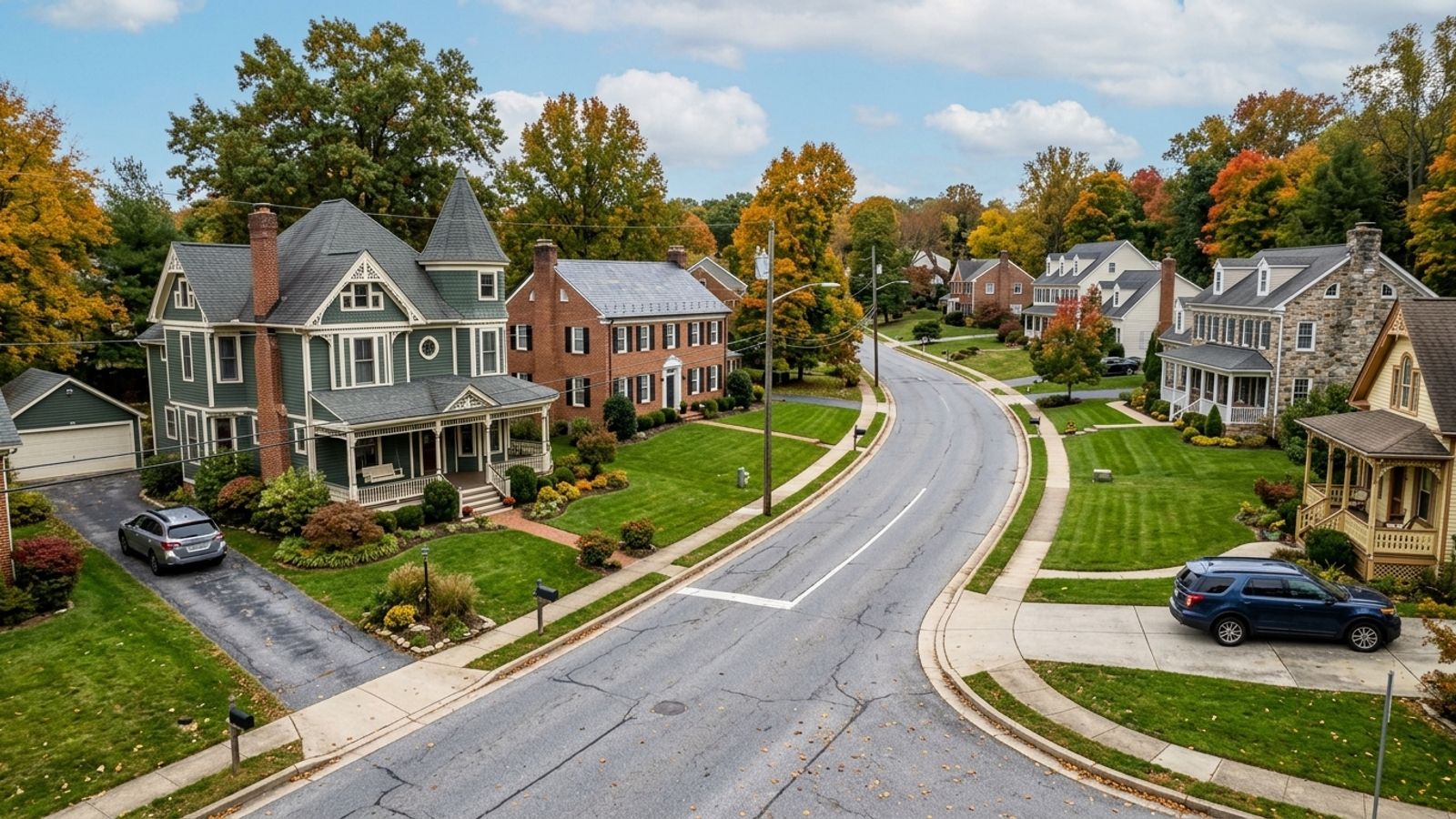
Inheriting a house means stepping into the legal system before a probate real estate agent in Ellicott City, MD can put a for-sale sign in the yard. In this market, the median home price sits around $718,000, and properties move fast - often going under contract in roughly 13 days.
Before you can list an inherited property, you have to work through probate. The Howard County Orphans' Court and Register of Wills oversee the procedure to make sure debts get paid and assets reach the right people. Knowing the timeline helps executors and heirs plan for the months ahead rather than getting blindsided by them.
How Maryland Probate Works for Real Estate
Probate is the legal process of administering a deceased person's estate. In Maryland, the person appointed to handle this is called the Personal Representative - not an executor - and they're responsible for managing the estate's assets, including any real estate.
The process varies depending on the size of the estate. Maryland law defines a small estate as having $50,000 or less in probate assets, or up to $100,000 if the surviving spouse is the sole heir or beneficiary. Estates that fall under those caps qualify for a simplified small estate administration procedure, which moves considerably faster than a standard proceeding.
What Probate Means for Inherited Homes
For most real estate, the property value alone pushes the estate well above the small estate threshold, so full probate is what you're looking at. Until the Personal Representative receives their official appointment - known as Letters of Administration - they don't have the legal authority to sell or transfer the house. That's not a technicality you can work around.
While that appointment is pending, the estate remains responsible for the property. The Personal Representative must keep the mortgage, property taxes, and utility bills current using estate funds while the legal process unfolds.
When a Property Requires Court Approval
Not every inherited home goes through probate. If the deceased placed the real estate in a living trust, or owned it jointly with a right of survivorship, the property transfers directly to the beneficiaries or surviving owner - no court involvement required.
If the property was owned solely by the deceased without those designations, it becomes a probate asset. The Howard County Orphans' Court then oversees the transfer or sale of the home to ensure it aligns with the will, or with Maryland's intestate succession laws if there wasn't one.
The Standard Timeline in Howard County
Full probate in Maryland generally takes a minimum of six to nine months, and it often stretches past a year. The timeline is dictated by statutory deadlines designed to give creditors and heirs time to make claims or raise objections - and those deadlines don't move because you're in a hurry.
All filings go through the Howard County Register of Wills and the Orphans' Court at 9250 Judicial Way in Ellicott City. The Personal Representative has to follow a specific sequence of steps to legally close the estate and distribute the proceeds from a home sale.
Filing the Petition and Gaining Authority
The process starts when someone files a petition for probate along with the original will, if one exists. The Register of Wills reviews the paperwork, and the Orphans' Court officially appoints the Personal Representative.
Once appointed, the Personal Representative receives Letters of Administration - the document that grants them legal power to access bank accounts, secure the real estate, and hire a real estate agent to list the home. Nothing meaningful can happen before that letter exists.
The Six-Month Creditor Waiting Period
Maryland law mandates a waiting period for creditors to present claims against the estate. That window lasts for six months after the decedent's death, or six months from the Personal Representative's appointment and notice publication.
Creditors who miss that window are barred from collecting the debt. Because of this rule, the estate can't be fully closed - and final proceeds from a house sale can't be completely distributed - until the six-month mark has passed. Plan around it, not against it.
Filing the Estate Inventory
Within three months of their appointment, the Personal Representative must file an inventory of the estate's assets. That includes a formal appraisal of the Ellicott City real estate to establish its date-of-death value.
The appraisal serves two purposes. It helps determine the property's tax basis, and it sets a benchmark for the sale price - one the court will use to confirm the Personal Representative is selling at fair market value.
Settling Debts and Property Taxes
As the six-month creditor window closes, the Personal Representative uses estate funds to pay valid claims. If the estate doesn't have enough cash to cover those debts, the real estate may need to be sold to generate the necessary funds. This is one of the reasons you can't always wait on the sale.
During this phase, the Personal Representative also prepares and files the deceased person's final income tax returns and any required estate tax returns.
Distributing Assets and Closing the Estate
After all debts, taxes, and administrative expenses are paid, the Personal Representative files a final accounting with the Register of Wills - a document that details every dollar that entered and left the estate.
Once the Orphans' Court approves that accounting, the remaining assets, including the proceeds from the home sale, are distributed to the heirs. The estate is officially closed.
Common Roadblocks That Slow Down the Process
The statutory minimums are just that - minimums. Many estates take longer than six months, and real estate transactions add their own layer of time, especially when a property needs repairs or a full cleanout.
Disagreements among heirs or complications with the property's title can push the timeline into a second year. Knowing where the friction points tend to appear lets the Personal Representative plan a more realistic schedule.
Family Disputes Over the Will or Property
If an heir contests the validity of the will, the probate process halts while the Orphans' Court resolves the dispute. Will contests require hearings and legal arguments, and they can delay the sale of the house by several months or more.
Even without a formal challenge, disagreements among siblings about whether to sell or buy each other out will stall progress just as effectively. Clear communication with all beneficiaries from the start isn't a courtesy - it's practical.
Delays in Preparing and Selling the House
Inherited homes often need extensive cleanout and preparation before they're ready for the market. Sorting through decades of personal belongings, arranging estate sales, and making necessary repairs takes real time.
Title issues compound the problem. Unresolved liens, unrecorded deeds, or boundary disputes require the Personal Representative to clear those defects before a buyer can close - and title companies won't budge on that.
Selling an Inherited House During the Process
You don't have to wait for the entire probate process to finish before selling the real estate. Once the Personal Representative has their Letters of Administration, they can start preparing the house for market.
In Ellicott City, buyer demand is strong, with local listings selling for roughly 102% of their asking price. That said, the legal steps required to actually finalize a sale depend on the specific authority the court granted.
How the Sale Fits Into the Timeline
Most Personal Representatives list the property during the six-month creditor waiting period. By the time the house is prepped, listed, and sold, the estate is usually well into its statutory timeline anyway - the two tracks run in parallel more often than people expect.
The proceeds don't go directly to the heirs at the closing table. The title company wires the funds into an estate bank account, where the money sits until the court approves the final distribution.
When You Need Court Confirmation
Whether court confirmation is required depends on the estate. A Personal Representative appointed with full authority - unrestricted letters - can generally sell real property without a separate court confirmation for that specific sale.
If the authority is restricted, or if the will or a court order limits the Personal Representative's power, the accepted offer has to go to the Orphans' Court for confirmation before closing. Heirs are given a notice period to object to the sale price or terms.
Working With a Local Agent
Probate sales involve different disclosures and timelines than a standard residential transaction. The Personal Representative should work with an agent who knows Howard County probate procedures - not someone who's going to learn on the job at the estate's expense.
An experienced agent knows how to write contracts that account for court confirmation when it's needed, and how to price the home accurately relative to the formal estate appraisal so the sale holds up to court scrutiny.
Frequently Asked Questions
How long does the full probate process typically take for a house in Ellicott City, MD?
It generally takes a minimum of six to nine months. Maryland law requires a six-month waiting period for creditors to file claims against the estate, and complications with preparing the house for sale or family disputes can push the timeline to a year or more.
Can I list or sell an inherited Ellicott City property before the probate process is completely finished?
Yes. You can sell the house during probate once the Personal Representative receives their Letters of Administration from the Orphans' Court. The proceeds from the sale are held in an estate bank account and distributed to the heirs after the estate closes.
How does qualifying for a Small Estate in Maryland speed up the timeline for transferring a home?
Estates with $50,000 or less in probate assets - or $100,000 if the surviving spouse is the sole beneficiary - qualify for simplified small estate administration, which moves much faster than full probate. The value of Ellicott City real estate usually pushes total assets well above those thresholds, so standard probate applies in most cases.
Are there specific delays with the Howard County Register of Wills that currently impact Ellicott City probate times?
The timeline is primarily driven by the mandatory six-month creditor waiting period, not administrative backlogs. All paperwork is processed through the Register of Wills and Orphans' Court at 9250 Judicial Way. Following their exact filing requirements is the most reliable way to keep things moving on schedule.
What are the most common family or legal issues that drag out the probate timeline for local real estate?
Will contests and disagreements among heirs over whether to sell the property are the most common family-side delays. On the legal side, clearing title defects and waiting for court confirmation when the Personal Representative was granted restricted authority are the typical culprits.
Who is responsible for property taxes and mortgage payments on an Ellicott City house while waiting for probate to close?
The estate is. The Personal Representative must use estate funds to pay the mortgage, property taxes, and utility bills until the home is sold or transferred to the beneficiaries.
FROM OUR BLOG
Selling a Home with a Probate Real Estate Agent in Columbia, MD
The median home sale price in Columbia, MD is currently around $510,000, and available homes spend roughly 25 days on the market before going under contract. For those buying a home in Columbia, MD, the market moves quickly. For executors and administrators managing an estate, those fast-moving mark
Best Real Estate Agent for Estate Sales in Ellicott City, MD: Jim Bim
Jim Bim has closed over 5,000 career transactions as the Broker and Owner of Winning Edge Real Estate. Finding the right agent for an estate sale in Ellicott City, MD comes down to what the executors and heirs need - someone who understands timelines, can handle the logistics, and knows how to price
Choosing Between an Estate vs Trust in Ellicott City, MD
The median sale price for a home in Ellicott City, MD recently hit roughly $761,000. For most homeowners, that's the single largest financial asset they'll ever own - and figuring out how to pass it on to the next generation means choosing a legal path before you need one. If your family is ever tas
Welcome to Winning Edge Real Estate a Family Owned and Operated Real Estate Brokerage where Winning Matters. We serve all of your real estate needs in and around the Baltimore / Washington Corridor. The Company is run by Jim Bim, Broker of Record, his son's Grant Bim and Weston Bim are Sales people within the company. Jim, Grant and Weston work to help their Sellers & Buyers accomplish their real estate goals while the Office Manager, Valerie Bim, and our Assistant, Kimberly make sure that homes go from "FOR SALE" to "SOLD" smoothly while making sure to keep you informed every step of the way. As real estate specialists we are experts in representing both home Sellers and home Buyers. We can help with general residential home / town home / condo resale, new homes, custom home construction, land sale, sub dividing acreage, as well as investment property. We are very knowledgeable of Howard County, Maryland as we have lived in the area for 40+ years. Due to our clients moving throughout the state, we also are very knowledgeable of Anne Arundel County, Carroll County, Frederick County, Baltimore County and Montgomery County. We actively work on a daily basis in areas that include: Fulton, Ellicott City, Columbia, Mount Airy, Clarksville, Woodstock, Jessup, Marriottsville, Glenelg, Glenwood, West Friendship, and everywhere in between. We also service Western Baltimore County which includes Arbutus, Halethorpe, Catonsville, Owings Mills and Reisterstown. We provide a free Maryland Real Estate search where we feature Howard County, Carroll County, Baltimore County, and Anne Arundel County real estate that will allow you to find homes, condos, townhomes, new homes, luxury homes, or even acreage, lots, or investment properties. Do you want to invest for your future, but you are not sure how to make the leap to become a real estate investor? We can help you find the right money making property, rent your property, and manage your property. If you have the desire to be a real estate investor, then we have the knowledge and know how to get you to real estate investor success. Quick Stats/Highlights: 100% of asking price (average) 63+ active listings Serving: 8 Maryland counties Hundreds of 5-star reviews