
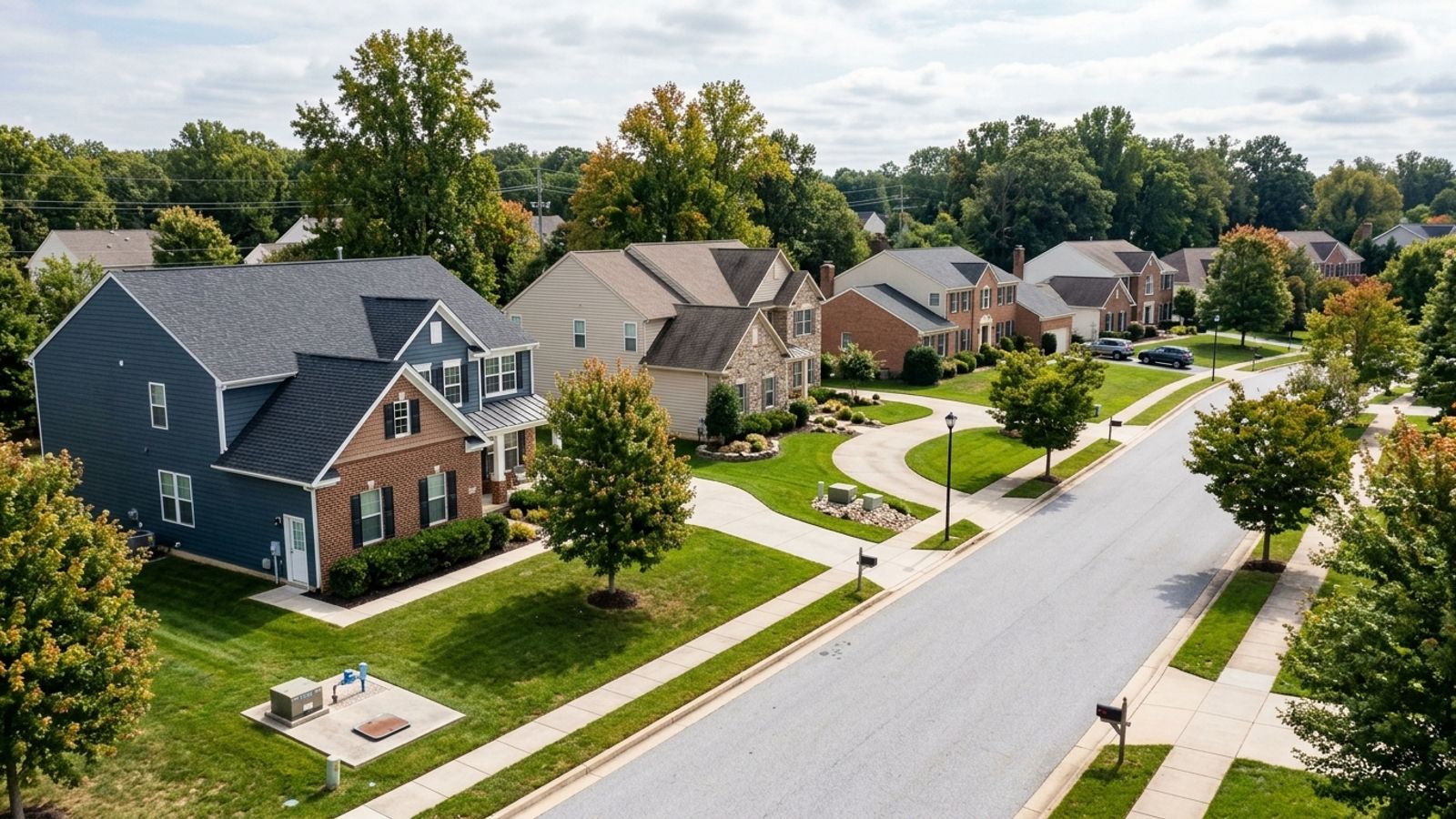
The Columbia housing market moves fast. With a median sale price around $510,000 and homes spending roughly 22 days on the market, buyers often have to make quick decisions to secure a property. This fast pace is just one factor to consider when weighing the pros and cons of living in Columbia, MD.
When you find a house you want, understanding the utilities in Columbia, MD, is a necessary step before closing. Electricity and gas are standard across the area, but the water supply can vary significantly depending on where a property sits in Howard County. Whether a home relies on the municipal system or a private well affects your monthly budget and your maintenance responsibilities - and those are two very different conversations.
The Basics of City Water and Well Water in Columbia
Columbia is an unincorporated planned community, which means it doesn't have its own separate municipal water utility. Public water and sewer services are managed directly by the Howard County Government through its Bureau of Utilities and Department of Public Works.
That county department coordinates with Baltimore City, Baltimore County, and the Washington Suburban Sanitary Commission (WSSC) for supply and treatment. Homes outside the reach of those public lines rely on private wells, drawing groundwater directly from the aquifer beneath the property.
Which Option is More Common Locally
Most neighborhoods in the center of Columbia connect to the Howard County public water and sewer system. As you move toward the outer edges of the community or into older, less dense subdivisions, private wells become more prevalent.
"City water well" is a term that trips up a lot of buyers. It usually refers to a municipal system that sources its supply from large communal groundwater wells rather than reservoirs - but if you're on the public system, you're not managing any of that equipment yourself.
How to Tell What Your Home Has
The easiest way to verify a home's water source is the property disclosures provided by the seller. You can also look for a water meter inside the home or near the street - that's a reliable sign of a public utility connection.
A private well will have a well cap protruding a few inches above the ground somewhere in the yard, and a pressure tank in the basement or utility room that pushes the water through the plumbing. Both are pretty easy to spot once you know what you're looking for.
Monthly Costs for Water in Howard County
Public water systems bill residents based on consumption and flat administrative rates. Independent well systems have no monthly usage fee. Those two sentences sound simple, but the full picture is a little more nuanced, and it matters when you're putting together a realistic monthly budget.
Free water from a well doesn't mean free operation. Well owners pay for the electricity required to run the pump, along with occasional maintenance and part replacements over the lifespan of the system.
Typical Municipal Water Bills
Howard County charges most residential customers a flat user fee of around $29 per month. On top of that administrative base, you pay usage-based charges for the actual gallons you consume.
For a typical household using about 5,000 gallons per month, the water-only portion of the bill runs roughly $18.51. Run an irrigation system or fill a swimming pool and that consumption - and that bill - goes up.
Well Maintenance and Septic Expenses
Properties with private wells almost always have private septic systems instead of public sewer connections. You won't pay a monthly utility bill to the county for either service.
What you will pay for: routine septic pumping every few years, occasional well inspections, and whatever repairs come up along the way. The electricity the well pump uses gets rolled into your standard monthly power bill - there's no separate line item for it.
Health, Safety, and Water Quality
Public utility providers treat and test their supply continuously to meet federal and state safety standards. When you turn on the tap in a home connected to the Howard County system, the water has been monitored and is ready to drink.
Private well owners are essentially their own water utility managers. The safety and quality of the supply depend entirely on your maintenance schedule and testing routines - nobody else is watching it for you.
Testing and Treatment for Private Wells
The Howard County Health Department recommends annual testing for all private wells. They can collect samples for bacteria and nitrate testing, which are then analyzed by the Maryland Department of Health Laboratory.
If contaminants or hard minerals turn up, homeowners can install treatment systems to address the problem. Water softeners, reverse osmosis filters, and UV lights can bring groundwater quality up to - or past - what you'd get from treated public water.
Skin and Household Impacts
Untreated groundwater often carries high levels of calcium and magnesium, which means hard water. That leaves mineral deposits on fixtures, shortens the lifespan of appliances, and can cause dry skin or hair after showering.
Public water is typically treated to balance those minerals, which is easier on both plumbing and people. Well owners usually solve the hardness problem with a whole-house water softening system.
Weighing the Pros and Cons of a Private Well
Independent water systems give you complete autonomy from municipal billing, but they require you to act as the utility manager. Some buyers find that appealing. Others find it exhausting. Neither reaction is wrong - it just depends on who you are.
The best choice comes down to how much hands-on management you're willing to accept, and it's worth being honest with yourself about that before you make an offer.
Upsides of Independent Water
The biggest advantage is no monthly water and sewer bill. You also avoid the chlorine and fluoride treatments that municipal plants use, which appeals to buyers who prefer natural groundwater.
And when a municipal water main breaks or a county-wide boil advisory goes out? Well owners don't notice. As long as the power's on, your water supply keeps running.
Potential Drawbacks to Consider
That's the catch - as long as the power's on. A severe storm that knocks out electricity stops the well pump, which means no running water until power returns or a generator comes online.
Homeowners also carry the full financial responsibility for repairs. Replacing a failed well pump or pressure tank can cost thousands of dollars out of pocket, with no utility company to absorb any of it.
Converting a Well to the Howard County Water System
If a public water main runs down your street, you may have the option to connect your property to the municipal system. The Howard County Well and Septic Program, operating under the Bureau of Environmental Health, oversees these transitions.
The health department reviews designs and conducts inspections to ensure all drinking water and sewage disposal systems meet local regulations. Getting there requires permits, inspections, and a meaningful upfront investment.
Connection Fees and Line Costs
According to the county's rate schedule, a standard 1-inch connection with a 3/4-inch meter requires a $300 administration and inspection fee. The meter itself is not included in that base fee.
You'll also pay to install a new water line from the house out to the street connection - typically $50 to $150 per linear foot for labor and materials. If your house sits well back from the road, that math gets expensive quickly.
Buying a Home with a Private Water Source
Standard home inspections don't cover the underground components of a private water system. That means purchasing a property with a well requires a few extra steps during the escrow period - steps worth taking before your contingency period ends, not after you've already moved in.
Hire specialized professionals to evaluate the equipment. It's a straightforward way to avoid replacement costs that land on you the week after closing.
Inspections to Schedule
Schedule a comprehensive well flow test to verify the system produces enough gallons per minute to support a household. A separate water quality test will confirm the absence of harmful bacteria, nitrates, and heavy metals.
Also ask the seller for maintenance records. The age of the pump, the depth of the well, the date of the last septic pumping - that information gives you a clear sense of what's coming and when.
Frequently Asked Questions
Who are the primary utility providers for electricity, gas, and water in Columbia, MD?
BGE is the primary provider for gas and electricity in the area. Water and sewer services are managed directly by the Howard County Government through its Bureau of Utilities, as Columbia has no separate municipal water department.
How far in advance of my closing date should I schedule my BGE service transfer?
Contact BGE well before your closing date to schedule the service transfer. That ensures your electricity and gas stay active during the transition from the seller to you without any interruption.
Do I need to manually set up water and sewer service, or is that handled by the title company during a Columbia home purchase?
Title companies generally coordinate the final reading and transfer of the Howard County public water and sewer account during the settlement process. Confirm this with your settlement agent to make sure the new account opens in your name.
What is the average monthly cost for utilities in a typical Columbia single-family home?
It depends on usage. For water, Howard County charges a flat $29 monthly user fee. A home using roughly 5,000 gallons a month will see an additional water-only usage cost of about $18.51.
Can I choose an alternative energy supplier for my Columbia home, or am I required to use BGE?
Maryland residents can select a third-party supplier for their energy rates. Even if you go that route, BGE will still deliver the energy, maintain the local grid, and handle your billing.
Does the Columbia Association (CA) annual charge cover trash and recycling pickup, or is that a separate Howard County service?
No, the Columbia Association annual charge doesn't cover trash and recycling collection. Those waste management services are handled separately as part of your Howard County local services.
FROM OUR BLOG
Selling a Home with a Probate Real Estate Agent in Columbia, MD
The median home sale price in Columbia, MD is currently around $510,000, and available homes spend roughly 25 days on the market before going under contract. For those buying a home in Columbia, MD, the market moves quickly. For executors and administrators managing an estate, those fast-moving mark
Best Real Estate Agent for Estate Sales in Ellicott City, MD: Jim Bim
Jim Bim has closed over 5,000 career transactions as the Broker and Owner of Winning Edge Real Estate. Finding the right agent for an estate sale in Ellicott City, MD comes down to what the executors and heirs need - someone who understands timelines, can handle the logistics, and knows how to price
Choosing Between an Estate vs Trust in Ellicott City, MD
The median sale price for a home in Ellicott City, MD recently hit roughly $761,000. For most homeowners, that's the single largest financial asset they'll ever own - and figuring out how to pass it on to the next generation means choosing a legal path before you need one. If your family is ever tas
Welcome to Winning Edge Real Estate a Family Owned and Operated Real Estate Brokerage where Winning Matters. We serve all of your real estate needs in and around the Baltimore / Washington Corridor. The Company is run by Jim Bim, Broker of Record, his son's Grant Bim and Weston Bim are Sales people within the company. Jim, Grant and Weston work to help their Sellers & Buyers accomplish their real estate goals while the Office Manager, Valerie Bim, and our Assistant, Kimberly make sure that homes go from "FOR SALE" to "SOLD" smoothly while making sure to keep you informed every step of the way. As real estate specialists we are experts in representing both home Sellers and home Buyers. We can help with general residential home / town home / condo resale, new homes, custom home construction, land sale, sub dividing acreage, as well as investment property. We are very knowledgeable of Howard County, Maryland as we have lived in the area for 40+ years. Due to our clients moving throughout the state, we also are very knowledgeable of Anne Arundel County, Carroll County, Frederick County, Baltimore County and Montgomery County. We actively work on a daily basis in areas that include: Fulton, Ellicott City, Columbia, Mount Airy, Clarksville, Woodstock, Jessup, Marriottsville, Glenelg, Glenwood, West Friendship, and everywhere in between. We also service Western Baltimore County which includes Arbutus, Halethorpe, Catonsville, Owings Mills and Reisterstown. We provide a free Maryland Real Estate search where we feature Howard County, Carroll County, Baltimore County, and Anne Arundel County real estate that will allow you to find homes, condos, townhomes, new homes, luxury homes, or even acreage, lots, or investment properties. Do you want to invest for your future, but you are not sure how to make the leap to become a real estate investor? We can help you find the right money making property, rent your property, and manage your property. If you have the desire to be a real estate investor, then we have the knowledge and know how to get you to real estate investor success. Quick Stats/Highlights: 100% of asking price (average) 63+ active listings Serving: 8 Maryland counties Hundreds of 5-star reviews