
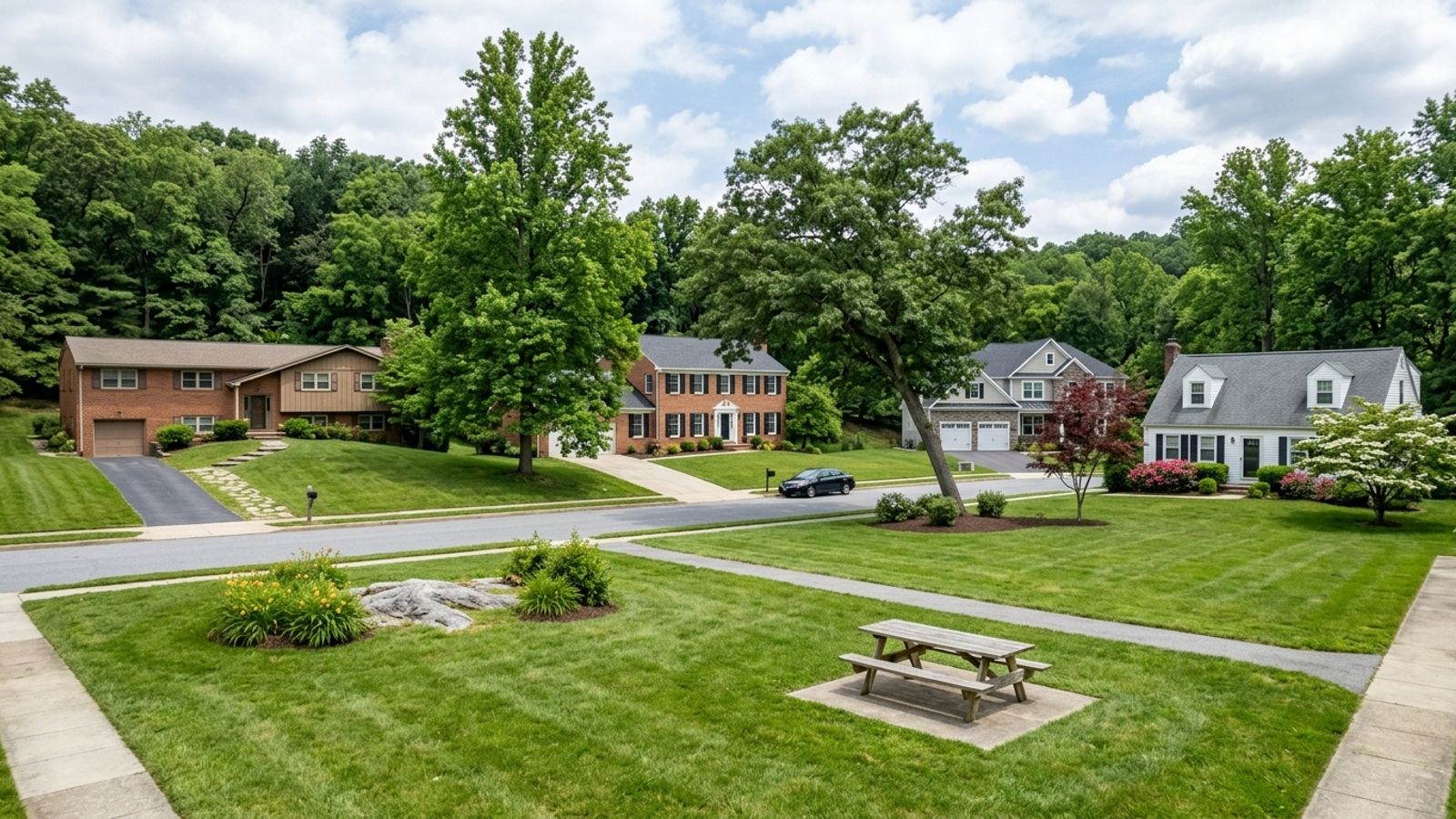
Ellicott City real estate doesn't sit still. The median sale price recently hit roughly $761,000, and homes are spending just about 20 days on the market. In that kind of environment, buyers and sellers run into all types of transactions, including standard residential sales and selling a house in an estate.
The distinction matters more than most people realize. A standard transaction has a living owner at the table. An estate sale happens after a homeowner passes away, and their court-appointed representative steps in to sell the house. The legal requirements, timelines, and disclosure obligations shift considerably between the two. Whether you're putting in an offer or managing an inherited property as an executor, knowing where those differences land keeps the process from catching you off guard.
Defining Estate Sales and Traditional Home Sales in Maryland
The core difference comes down to one question: who holds the legal authority to sign the contract? In a standard transaction, the person on the deed is the one negotiating terms and handing over the keys. They have firsthand knowledge of the property and full control over timing.
An estate sale puts a fiduciary in that seat instead. In Maryland, this person is called a personal representative - though most people say executor - and they're acting on behalf of a deceased homeowner. That representative must be legally appointed by the court before they can list the home, accept an offer, or transfer title to anyone.
What is a Traditional Home Sale?
A traditional home sale is a straightforward exchange between a living property owner and a buyer. The seller decides to move, hires an agent, prepares the house, and signs the paperwork. Because they've lived in or actively managed the home, they can answer direct questions about its history, maintenance, and quirks.
These transactions follow a predictable path. Once both parties agree to terms, closing typically happens in 30 to 45 days - driven by the buyer's financing and the seller's moving schedule, nothing more complicated than that.
What is a Real Estate Estate Sale?
A real estate estate sale happens during the probate process after a property owner passes away. The court-appointed personal representative takes charge of the sale to liquidate the asset, with the goal of distributing proceeds to heirs or paying off the deceased person's remaining debts.
The personal representative might have never set foot in the home. Their job is to secure a fair price for the estate while following Maryland probate laws - and they're operating under court-mandated timelines that dictate how and when the estate can be settled.
How the Selling Process Differs for Inherited Properties
Standard transactions and estate sales use the same base contracts. All residential contracts in this area run on standard Maryland Association of Realtors (MAR) and Howard County Association of Realtors (HCAR) forms, and the required Howard County Notice and Disclosure Addendum applies to every sale regardless of who's selling.
The differences surface in the seller's legal obligations and the timeline for closing. Executors operate under specific statutory deadlines and exemptions that don't apply to regular homeowners - and those rules shape how quickly a deal can close and how much information a buyer receives upfront.
Timelines and Howard County Court Approvals
Maryland probate is typically handled by a county's Orphans' Court. Howard County is an exception - here, the Circuit Court handles probate matters. A typical Howard County probate estate takes between 9 and 18 months to close, driven largely by a mandatory six-month creditor claims period that starts on the date of death. Small estates valued under $50,000 can move faster, sometimes finishing in two to four months.
The personal representative faces specific statutory deadlines throughout this process. An inventory and Information Report must be filed within three months of appointment. The first administration account is due within nine months. Complete and final distribution must happen within 12 months unless the court approves an extension. These aren't suggestions - they're hard deadlines that shape the entire transaction calendar.
Property Condition and As-Is Sales
Inherited properties frequently hit the market in as-is condition. The personal representative often lacks the funds or the mandate to make cosmetic updates, repair broken appliances, or replace an aging roof before listing. Buyers should expect to handle most maintenance issues themselves after closing.
In a traditional sale, buyers routinely negotiate repairs or ask for credits after a home inspection. You can still conduct an inspection on an estate property - and you should - but executors are much less likely to agree to repair requests. They're focused on settling the estate efficiently, not managing a renovation schedule.
Maryland Disclosures and Seller Knowledge
Under Section 10-702 of the Maryland Real Property Article, a personal representative selling a home during estate administration is exempt from providing the standard residential disclosure and disclaimer form. The law doesn't expect an executor who never lived there to have reliable knowledge of past leaks, electrical issues, or structural defects.
That exemption is specific, though. It covers the standard property disclosure form and nothing else. Executors must still provide other required documents - including the federal lead-based paint disclosure for homes built before 1978. And if an heir takes title in their own name and later decides to sell, they're treated as an ordinary seller and must provide the full disclosure form.
What Buyers Should Know About Estate Properties
With roughly 110 homes currently in Ellicott City's inventory, buyers don't have a lot to choose from. Estate sales can open up access to properties in established neighborhoods where homes rarely change hands - and that's a real draw for buyers who have a specific area in mind.
That said, buying an inherited home requires patience and a clear-eyed read on the risks involved.
Benefits of Buying an Estate Sale Property
Estate sales often feature properties that have been in the same family for decades. That means access to established communities with mature trees and larger lots - the kind of thing that simply doesn't exist in newer developments. Because executors are focused on liquidating the asset to distribute funds to heirs, they're generally motivated sellers. They still have a fiduciary duty to get a fair price, but a smooth, straightforward offer can carry real weight against one that comes loaded with conditions.
Risks and Challenges to Consider
The biggest challenge is the potential for delayed closings. If the personal representative hasn't finalized the necessary court approvals, or if title issues surface during the probate process, your closing date can slip by weeks or months. Plan for that possibility before you're under contract.
Buyers also absorb the risk of deferred maintenance. Without a standard Maryland property disclosure to reference, your home inspection is doing all the work. It's on you to uncover hidden defects, aging systems, or structural problems before you finalize the purchase.
Selling an Inherited Property as an Executor in Howard County
Managing an estate sale is a serious responsibility. The personal representative has a fiduciary duty to protect the estate's assets and act in the best interests of heirs and creditors - which means financially sound, informed decisions throughout the entire selling process.
About 55% of homes in Ellicott City recently sold above list price, which tells you buyer demand is real. Executors who prepare the property appropriately and price it correctly can take advantage of that demand while staying within the legal boundaries of the probate process.
Working with a Local Real Estate Agent
Executors should work with an agent who knows Howard County Circuit Court probate procedures - not just someone who's vaguely familiar with estate sales. An experienced agent will know how to format the MAR and HCAR contracts correctly and make sure the required Howard County Notice and Disclosure Addendum is attached.
The agent also helps establish a competitive list price based on recent neighborhood sales. Pricing an as-is property correctly from the start prevents it from sitting on the market - and a property that lingers drains estate funds through ongoing property taxes and utility bills.
Preparing the Home for the Market
Before listing, the executor has to clear all personal belongings from the house. That usually means coordinating with heirs to claim sentimental items, hosting a personal property estate sale, or hiring a clean-out crew to handle whatever's left.
Major renovations rarely make sense for estate properties. But basic preparation does - deep cleaning, maintaining the landscaping, and making sure all locks are secure. These steps make the home more presentable to buyers without requiring significant upfront capital from the estate.
Frequently Asked Questions
What is the main difference between an estate sale and a traditional home sale in Maryland?
The main difference is who holds the legal authority to sell the property. In a traditional sale, a living owner signs the contract, while an estate sale is managed by a court-appointed personal representative acting on behalf of a deceased homeowner.
Do estate sales take longer to close than traditional sales in Howard County?
Yes, they often take longer. Howard County probate estates typically take between 9 and 18 months to fully resolve, and closing dates can be delayed by mandatory court filings or the six-month creditor claims period.
Are estate sale homes in Ellicott City always sold as-is?
Most are. Personal representatives usually lack the funds or authority to make repairs, and they're legally exempt from providing the standard Maryland residential property disclosure.
What extra steps must an executor take before listing an estate property in Ellicott City?
The executor must be officially appointed by the Howard County Circuit Court before they can list the home. They also need to clear all personal belongings from the property and file an inventory report with the court within three months of their appointment.
Are buyer closing costs different for an estate sale compared to a standard home purchase in MD?
No. Standard buyer closing costs remain the same - appraisal, title insurance, loan origination fees, and the buyer's portion of Maryland transfer taxes, just as they would be in a traditional transaction.
What happens to the sale if multiple heirs disagree on an offer for an Ellicott City estate home?
It depends on how the estate is structured, but the court-appointed personal representative generally holds the final authority to accept an offer. The representative has a fiduciary duty to secure a fair price, and heirs can't arbitrarily block a sale if the executor is acting within their legal mandate.
FROM OUR BLOG
Selling a Home with a Probate Real Estate Agent in Columbia, MD
The median home sale price in Columbia, MD is currently around $510,000, and available homes spend roughly 25 days on the market before going under contract. For those buying a home in Columbia, MD, the market moves quickly. For executors and administrators managing an estate, those fast-moving mark
Best Real Estate Agent for Estate Sales in Ellicott City, MD: Jim Bim
Jim Bim has closed over 5,000 career transactions as the Broker and Owner of Winning Edge Real Estate. Finding the right agent for an estate sale in Ellicott City, MD comes down to what the executors and heirs need - someone who understands timelines, can handle the logistics, and knows how to price
Choosing Between an Estate vs Trust in Ellicott City, MD
The median sale price for a home in Ellicott City, MD recently hit roughly $761,000. For most homeowners, that's the single largest financial asset they'll ever own - and figuring out how to pass it on to the next generation means choosing a legal path before you need one. If your family is ever tas
Welcome to Winning Edge Real Estate a Family Owned and Operated Real Estate Brokerage where Winning Matters. We serve all of your real estate needs in and around the Baltimore / Washington Corridor. The Company is run by Jim Bim, Broker of Record, his son's Grant Bim and Weston Bim are Sales people within the company. Jim, Grant and Weston work to help their Sellers & Buyers accomplish their real estate goals while the Office Manager, Valerie Bim, and our Assistant, Kimberly make sure that homes go from "FOR SALE" to "SOLD" smoothly while making sure to keep you informed every step of the way. As real estate specialists we are experts in representing both home Sellers and home Buyers. We can help with general residential home / town home / condo resale, new homes, custom home construction, land sale, sub dividing acreage, as well as investment property. We are very knowledgeable of Howard County, Maryland as we have lived in the area for 40+ years. Due to our clients moving throughout the state, we also are very knowledgeable of Anne Arundel County, Carroll County, Frederick County, Baltimore County and Montgomery County. We actively work on a daily basis in areas that include: Fulton, Ellicott City, Columbia, Mount Airy, Clarksville, Woodstock, Jessup, Marriottsville, Glenelg, Glenwood, West Friendship, and everywhere in between. We also service Western Baltimore County which includes Arbutus, Halethorpe, Catonsville, Owings Mills and Reisterstown. We provide a free Maryland Real Estate search where we feature Howard County, Carroll County, Baltimore County, and Anne Arundel County real estate that will allow you to find homes, condos, townhomes, new homes, luxury homes, or even acreage, lots, or investment properties. Do you want to invest for your future, but you are not sure how to make the leap to become a real estate investor? We can help you find the right money making property, rent your property, and manage your property. If you have the desire to be a real estate investor, then we have the knowledge and know how to get you to real estate investor success. Quick Stats/Highlights: 100% of asking price (average) 63+ active listings Serving: 8 Maryland counties Hundreds of 5-star reviews