
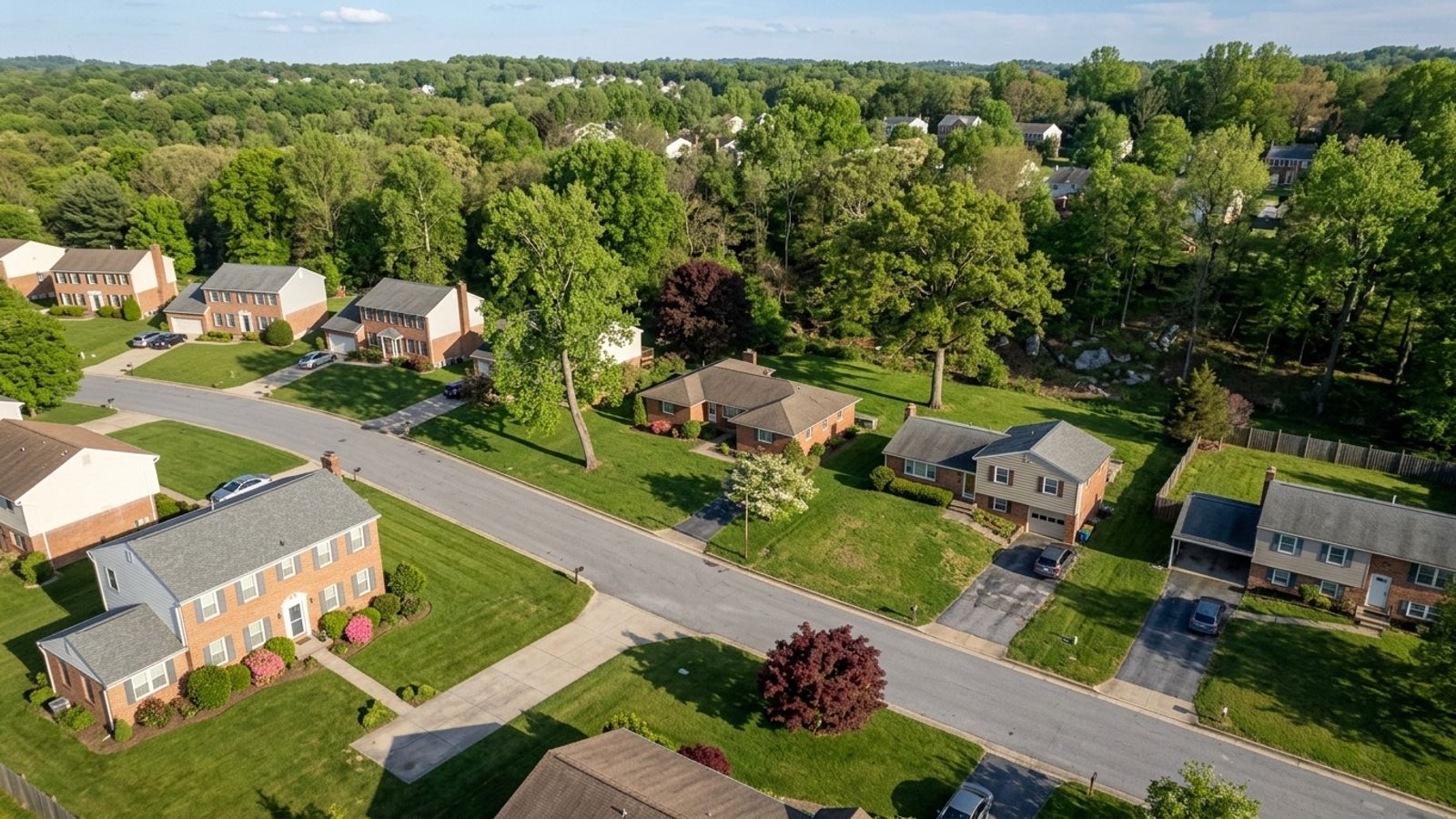
Managing an estate sale means juggling legal timelines and real estate market realities at the same time - and in Ellicott City, the market isn't waiting around. The median home sale price here is around $761,000, and properties are spending roughly 20 days on the market before going under contract. Competition is strong among those buying a home in Ellicott City, MD.
Selling a house in an estate in Ellicott City, MD requires specific legal authority before any transaction can happen. Executors and administrators are dealing with a unique set of tasks - securing the property, clearing out decades of belongings, and understanding local court procedures - often all at once. Knowing what to expect at each step makes the difference between a process that moves and one that stalls.
How the Estate Property Sale Process Works Locally
Before you can list the home, you need the legal right to sell it. In Howard County, that authority comes from the Register of Wills, located at the Circuit Courthouse at 9250 Judicial Way. One thing worth knowing about Howard County: unlike most Maryland counties, it doesn't have separately elected Orphans' Court judges. Circuit Court judges rotate into that role instead.
Most local estates go through administrative probate. The Register of Wills admits the will and appoints the personal representative directly - usually without any judicial involvement. Once you file a complete petition, Letters of Administration typically come through promptly.
Probate Court vs. Living Trust Sales
If the deceased held the real estate in a living trust, the sale bypasses probate entirely. The named trustee already has the authority to list the home, sign the listing agreement, and transfer the deed. No court filing fees, no waiting on the process.
Homes held solely in the deceased person's name are a different story. The court oversees the estate settlement and makes sure debts are paid before proceeds reach the heirs. You cannot legally sell or transfer the property until the court issues your letters of authority - full stop.
The Executor's Role and Legal Authority
As executor or administrator, your job is to manage the estate's assets, pay off valid debts, and distribute what's left to the beneficiaries. For real estate specifically, that means maintaining the property, getting it ready for sale, and signing the closing documents.
Buyers and title companies will require proof of your authority before anything closes. You'll need to provide a copy of your Letters of Administration to the title company to clear the title. Without that document, the sale doesn't happen.
Preparing the Property for the Market
An unoccupied home needs attention right away - not eventually. Start by updating the property insurance to a vacant home policy, because standard coverage often lapses if the house sits empty for too long. Change the locks early; copies of the old keys could be with neighbors, contractors, or extended family members you may not even know about. Keep the utilities on and forward the mail. A home without heat in winter is a home with frozen pipes.
Securing the Home and Valuables
Before any outside vendors set foot in the house, walk through it with family. Locate important documents, financial records, and sentimental items, and get them off-site. Once the most personal items are safe, organizing the rest becomes a lot more manageable.
If the home is going to sit vacant for a stretch, consider motion-sensor lights or a basic security system. Regular check-ins - by you or a local agent - can catch a maintenance issue before it becomes an expensive problem.
The Date of Death Appraisal
You'll need to establish what the home was worth on the exact day the owner passed away. This is called a date of death appraisal, and it's not optional. A licensed appraiser reviews historical market data to pin down that value, which is required for tax and estate reporting purposes.
Even if you don't sell the home for several months, this appraisal matters. It sets the step-up in basis - a tax provision that directly affects how much in capital gains taxes the estate or heirs might owe when the property eventually sells.
Clearing Out the House
Emptying a house full of belongings is usually the most time-consuming part of this whole process. Many executors bring in professionals. Local options include Caring Transitions of Ellicott City, which handles estate sales, online auctions, and full home cleanouts. Hereafter Auctions & Appraisals offers online auctions and appraisal services as well. For a broader cleanout, Sanford and Son Estate Liquidations & Cleanouts, based in nearby Columbia, also serves the Ellicott City area.
Deciding Between As-Is Sales and Making Repairs
Ellicott City homes are currently selling for an average of 102.3% of their list price. That's not a soft market - buyers are competing. Executors still debate whether to renovate or list as-is, and it's a fair question, but the answer usually tilts toward as-is. Inventory is tight, and buyers are willing to take on properties that need cosmetic work.
Selling as-is lets the estate close faster and avoids draining cash reserves on construction projects. That said, a home with serious structural or mechanical problems may only attract investors, and that tends to show in the final number.
Evaluating the Return on Updates
If the estate has funds available, minor updates - fresh paint, new carpet, professional landscaping - tend to offer a reasonable return. They help the home photograph well and appeal to buyers who want to move in without doing a project first.
Full kitchen or bathroom remodels are a different calculation entirely. Managing contractors takes time, the estate pays carrying costs throughout, and buyers often want to choose their own finishes anyway. For most estate situations, large-scale renovations don't pencil out.
Maryland Property Disclosure Rules for Executors
Under Maryland Real Property Code §10-702, transfers by a fiduciary administering an estate are exempt from the standard Residential Property Disclosure and Disclaimer Statement. The reasoning is straightforward: since the executor typically didn't live in the home, they're not expected to know its full maintenance history.
That exemption is not a free pass, though. You still cannot actively conceal known latent defects that threaten health or safety. If you know the roof leaks or the foundation is failing, you disclose it. The exemption covers what you don't know - not what you do.
Tax Considerations for Estate Sales
Selling an inherited property comes with a different set of tax rules than selling a primary residence. The most consequential one for heirs is the step-up in basis, which adjusts the home's value for tax purposes to its market value at the time of the owner's death. That one provision can save heirs a significant amount of money at closing.
Because tax laws change and every estate is structured differently, this is one area where you want a local CPA or estate attorney in your corner. They can review the estate's specific financial picture and make sure all state and federal filings are handled correctly.
How the Step-Up in Basis Works
Here's a straightforward example. If the deceased purchased the home decades ago for $100,000, and it's worth $750,000 when they pass away, the heirs don't owe capital gains taxes on that $650,000 increase. The tax basis steps up to $750,000 - the date of death value.
If the estate then sells the property for $760,000, capital gains taxes apply only to the $10,000 that accumulated between the date of death and the closing date. That's the whole point of the provision.
Capital Gains and Estate Taxes
Most estates won't owe federal estate taxes - the federal exemption limit is quite high. Maryland has its own estate tax thresholds as well, and a local accountant can help you evaluate where the estate stands based on the total value of the deceased's assets.
Any capital gains realized after the date of death are typically paid by the estate if the property sells during probate, or by the heirs if the property was transferred to them before the sale. Deducting selling costs - agent commissions, closing costs - can reduce that tax burden further.
Working With the Right Real Estate Agent
An estate listing isn't a standard transaction. You're dealing with court-approved timelines, specific addendums, and often several family members who all have opinions. An agent who understands the Howard County probate process keeps the sale compliant and moving - and keeps you from learning the hard way about a step you skipped.
A good local agent also brings a network: contractors, appraisers, and title companies who've handled estate transactions before. When the estate needs a quick repair, a date of death appraisal, or a title company that knows exactly how to review Letters of Administration, that network matters.
Why Local Probate Experience Helps
An agent familiar with Howard County knows that administrative probate here moves quickly - which means the property can often hit the market sooner than it could in jurisdictions with heavier judicial involvement. A well-timed listing, aligned with when your legal authority issues, can make a real difference.
An agent with estate experience also knows how to communicate with the estate's attorney and the heirs - providing clear, data-driven updates on showings and offers, so the family can reach a consensus without the process grinding to a halt every time an offer comes in.
Frequently Asked Questions
How long does it take to sell a house in an estate in Maryland?
It depends on the probate process and the market. In Howard County, administrative probate moves quickly since the Register of Wills issues Letters of Administration without a judge. Once listed, Ellicott City homes currently spend about 20 days on the market before going under contract.
Can I sell an estate property before probate is granted?
No. You cannot legally transfer the title to a buyer until the Register of Wills issues your Letters of Administration. You can, however, use the waiting period productively - clear out the house, get a date of death appraisal, and interview real estate agents.
Do I have to pay taxes when selling an estate house?
It depends on the sale price compared to the date of death appraisal. Thanks to the step-up in basis, you only owe capital gains taxes on any appreciation that occurs between the owner's death and the closing date. You can also deduct selling expenses to reduce that tax liability.
Is it better to sell an inherited Ellicott City home as-is or pay for repairs before listing?
Most estates sell as-is to save time and preserve funds. With Ellicott City homes currently selling for an average of 102.3% of their list price, buyer demand is strong enough that major renovations are rarely necessary to secure a good offer.
How do I find a real estate agent in Ellicott City who specializes in Howard County probate sales?
Look for an agent who has specific experience with the Register of Wills at the Howard County Circuit Courthouse. Ask potential agents about their network of local estate liquidators and their familiarity with Maryland Real Property Code §10-702 disclosure exemptions.
What happens if the heirs disagree on the listing price or whether to sell the Ellicott City property?
The executor holds the legal authority to make the final decision on the sale. If disagreements escalate, heirs can petition the Orphans' Court for Howard County to intervene. Consulting the estate's attorney is the most direct way to resolve these disputes before they delay the sale.
FROM OUR BLOG
Best Real Estate Agent for Estate Sales in Ellicott City, MD: Jim Bim
Jim Bim has closed over 5,000 career transactions as the Broker and Owner of Winning Edge Real Estate. Finding the right agent for an estate sale in Ellicott City, MD comes down to what the executors and heirs need - someone who understands timelines, can handle the logistics, and knows how to price
Choosing Between an Estate vs Trust in Ellicott City, MD
The median sale price for a home in Ellicott City, MD recently hit roughly $761,000. For most homeowners, that's the single largest financial asset they'll ever own - and figuring out how to pass it on to the next generation means choosing a legal path before you need one. If your family is ever tas
What to Expect From an Estate Sale vs a Traditional Home Sale in Ellicott City, MD
Ellicott City real estate doesn't sit still. The median sale price recently hit roughly $761,000, and homes are spending just about 20 days on the market. In that kind of environment, buyers and sellers run into all types of transactions, including standard residential sales and selling a house in a
Welcome to Winning Edge Real Estate a Family Owned and Operated Real Estate Brokerage where Winning Matters. We serve all of your real estate needs in and around the Baltimore / Washington Corridor. The Company is run by Jim Bim, Broker of Record, his son's Grant Bim and Weston Bim are Sales people within the company. Jim, Grant and Weston work to help their Sellers & Buyers accomplish their real estate goals while the Office Manager, Valerie Bim, and our Assistant, Kimberly make sure that homes go from "FOR SALE" to "SOLD" smoothly while making sure to keep you informed every step of the way. As real estate specialists we are experts in representing both home Sellers and home Buyers. We can help with general residential home / town home / condo resale, new homes, custom home construction, land sale, sub dividing acreage, as well as investment property. We are very knowledgeable of Howard County, Maryland as we have lived in the area for 40+ years. Due to our clients moving throughout the state, we also are very knowledgeable of Anne Arundel County, Carroll County, Frederick County, Baltimore County and Montgomery County. We actively work on a daily basis in areas that include: Fulton, Ellicott City, Columbia, Mount Airy, Clarksville, Woodstock, Jessup, Marriottsville, Glenelg, Glenwood, West Friendship, and everywhere in between. We also service Western Baltimore County which includes Arbutus, Halethorpe, Catonsville, Owings Mills and Reisterstown. We provide a free Maryland Real Estate search where we feature Howard County, Carroll County, Baltimore County, and Anne Arundel County real estate that will allow you to find homes, condos, townhomes, new homes, luxury homes, or even acreage, lots, or investment properties. Do you want to invest for your future, but you are not sure how to make the leap to become a real estate investor? We can help you find the right money making property, rent your property, and manage your property. If you have the desire to be a real estate investor, then we have the knowledge and know how to get you to real estate investor success. Quick Stats/Highlights: 100% of asking price (average) 63+ active listings Serving: 8 Maryland counties Hundreds of 5-star reviews