
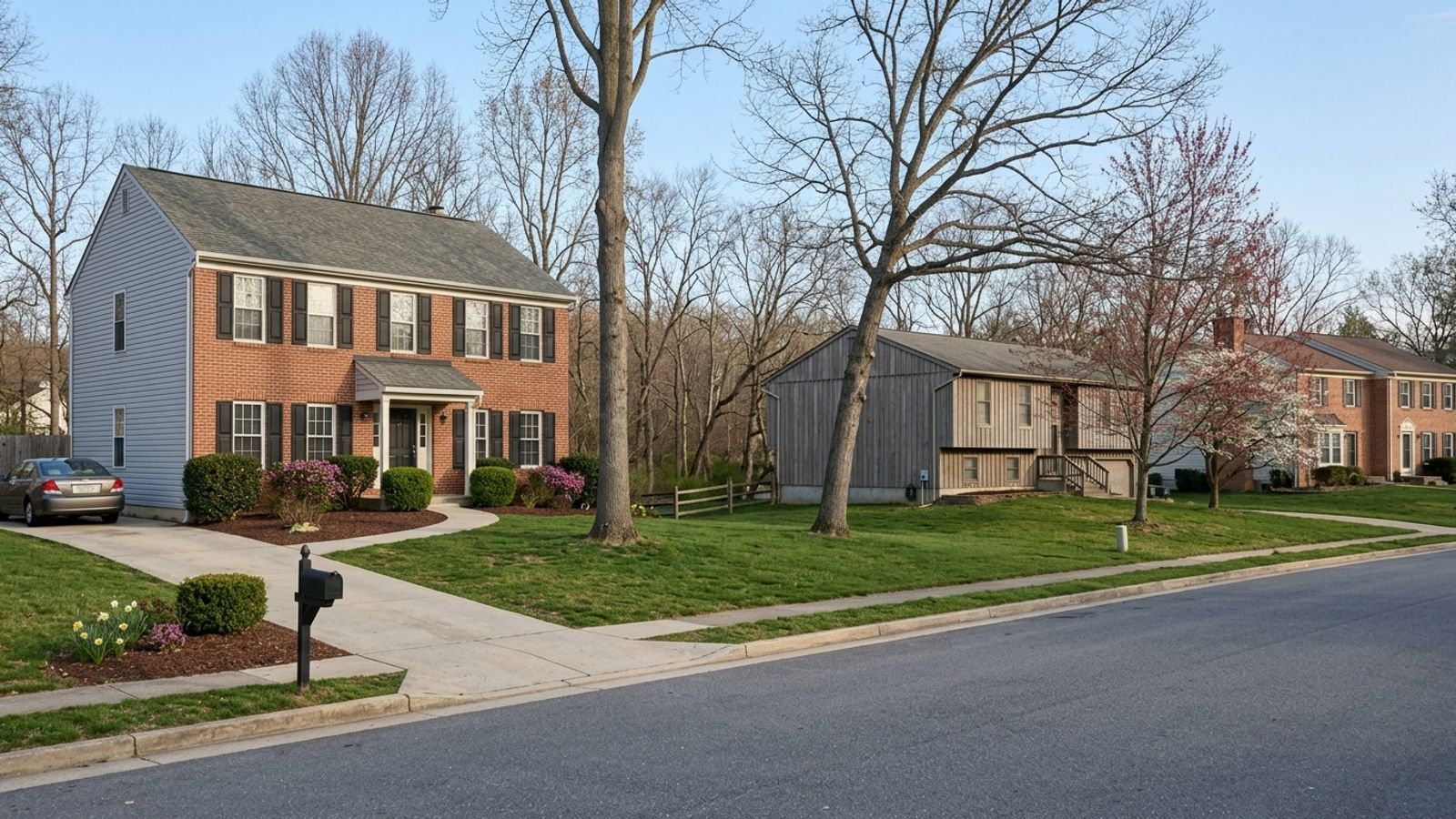
Inheriting a house means dealing with two things at once - a financial opportunity and a legal puzzle. Maryland defaults to a formal court process for transferring ownership, and most heirs would rather skip it if they legally can. Handling the sale itself requires a probate real estate agent in Columbia, MD.
The good news: if the property was set up correctly before the owner died, you can bypass the court timeline entirely. That means you can list the house faster and stop the clock on months of holding costs while you wait for official clearance.
The Howard County Probate Process and Real Estate
In Columbia, estate administration runs through the Register of Wills for Howard County. That office opens the estate, appoints the personal representative, and issues letters of administration. The Orphans' Court for Howard County serves as the local probate court, with judges from the Circuit Court sitting every Thursday afternoon to handle matters.
Plan on nine to eighteen months to wrap up a standard estate - and that's assuming no one fights about anything.
How Maryland Handles Estate Administration
When an estate goes through administrative probate, the personal representative must file an account within nine months of their appointment. That document covers what the deceased owned, what's been paid out, and what distributions are expected.
After that initial filing, the representative submits an updated administration account every six months until the estate closes. Some estates qualify for modified administration, which lets the representative make final distributions within twelve months.
The Cost of Court Delays for Property Owners
Waiting nine to eighteen months to clear a title means the estate keeps paying. Property taxes, utilities, and maintenance on a Columbia home add up fast over a year.
Bypassing the system lets heirs list immediately - no vacant house sitting and deteriorating while the court processes paperwork.
Legal Methods to Bypass Probate for Columbia Homes
Maryland law offers several ways to transfer real property outside of the Orphans' Court. They all depend on how the deed was titled or how the estate was structured before the owner died. If the deceased used one of these tools, the house isn't part of the probate estate, and you can move forward with a title company and a real estate agent to sell.
Holding Property in a Living Trust
A living trust is one of the most common routes around court oversight. When a homeowner transfers their Columbia property into a trust, the trust itself becomes the legal owner.
At the creator's death, the named successor trustee has immediate authority to manage or sell the house - sign closing documents, distribute proceeds to beneficiaries, all of it - without waiting for letters of administration.
The Maryland Transfer on Death Deed Act
As of October 1, 2026, Maryland officially allows Transfer on Death (TOD) deeds for real estate. Signed into law earlier this year by Governor Wes Moore, the act lets owners leave real estate to a named beneficiary entirely outside of probate.
To be valid, the owner must sign the deed, have it notarized, and record it in the Maryland Land Records while they're still alive. The deed stays revocable during the owner's lifetime, and the beneficiary has no ownership rights until the owner passes away.
Joint Tenancy and Survivorship Rights
If the property was owned in joint tenancy with right of survivorship, ownership passes automatically to the surviving owner. It's standard for married couples but can apply to other co-owners as well. The surviving owner records the death certificate with the county, title clears, and they have full legal authority to sell. That's the whole process.
Small Estate Administration Limits
Maryland offers a simplified small estate administration process under Form RW1103 for estates with a gross value under $50,000 - or $100,000 if the sole heir is a surviving spouse or child. While this avoids full Orphans' Court proceedings, it almost never applies to real estate in Columbia. With the local median home price around $509,000, nearly any property pushes the estate well past the small estate threshold before you even count anything else.
Taxes on Inherited Property Sales
Selling an inherited house comes with different tax rules than selling a primary residence. You don't pay income tax on the inheritance itself, but you may owe capital gains tax on the property's appreciation after the owner's death. How that calculation works determines your net proceeds.
How the Stepped-Up Basis Works
When you inherit a house, the IRS adjusts its tax basis to the fair market value at the time of the original owner's death - the stepped-up basis. If the original owner paid $150,000 for the house and it's worth $500,000 when they die, your basis becomes $500,000. Sell it shortly after for $510,000, and you only owe capital gains tax on that $10,000 difference.
In practice, many heirs who sell quickly owe little or nothing.
Filing Requirements and Professional Help
Even if the stepped-up basis wipes out your capital gains liability, you still have to report the sale to the IRS. The transaction goes on your federal tax return for the year the sale closes.
Talk to a licensed CPA or tax professional in Maryland before you list. A tax advisor can confirm your exact basis and make sure you file the right forms - don't guess on this one.
Preparing and Listing the Inherited Property
Once you have legal authority to sell, the focus shifts to the property itself. Inherited homes often need real work before they're market-ready, and the question is always how much preparation is worth the time it takes - because every week costs the estate money.
Managing Personal Belongings
Start by clearing out the deceased's personal property. Let family members take what they want, then bring in an estate sale company or junk removal service for the rest.
A vacant home shows better and makes it easier to assess what you're dealing with. Buyers struggle to picture themselves in a space full of someone else's belongings - even nice ones.
Deciding Between As-Is Sales and Repairs
Many inherited homes have deferred maintenance. You can sell as-is, which attracts investors and buyers looking for a project and speeds up the timeline - but it generally means a lower price. Cosmetic updates like fresh paint and new flooring usually yield a higher return, as long as you have the upfront cash to fund them.
Neither approach is wrong. It depends on the condition of the house, the estate's cash position, and how quickly the heirs need to close.
Pricing for the Local Market
The median sale price in Columbia is around $509,000, with homes selling in about 25 days. Inventory sits at 1.5 months of supply, and homes are selling for just over 101% of their asking price on average. Pricing correctly from day one matters. Overprice an inherited home that needs work and it sits - while the estate keeps paying taxes and utilities on it.
Finding the Right Real Estate Agent for an Estate Sale
This is not a transaction for an agent who only handles standard residential sales. Selling an inherited property requires someone who understands title transfers, trust documents, and Maryland's new TOD deed laws - and who knows how to coordinate with a title company when the original owner is deceased.
The right agent can also connect you with contractors for cleanouts and put together a pricing strategy that reflects what Columbia buyers are doing right now. That frees the family to focus on wrapping up the rest of the estate instead of managing logistics.
Frequently Asked Questions
Can I sell an inherited property before probate is complete in Maryland?
Yes, but only if the property was held in a living trust, titled with joint tenancy, or transferred via a Transfer on Death deed. If the home is part of the standard probate estate, you must wait for the Register of Wills to issue letters of administration before you can legally sell it.
What is a small estate affidavit and can I use it to sell a house in Columbia?
A small estate affidavit (Form RW1103) is a simplified Maryland process for estates valued under $50,000, or $100,000 if the sole heir is a spouse or child. Because the median home price in Columbia is around $509,000, this process almost never applies to real estate sales.
Do I have to pay capital gains tax when selling an inherited home?
It depends on the sale price compared to the property's value at the time of the owner's death. Thanks to the stepped-up tax basis, you only pay capital gains on the appreciation that occurs after the original owner passes away, not on the home's total historical gain.
Does a Columbia property automatically bypass Maryland probate if it was held in a living trust?
Yes. When a home is deeded to a living trust, the trust is the legal owner. The successor trustee can sell the property immediately upon the original owner's death without Orphans' Court approval.
What happens if multiple heirs inherit a house in Columbia but we can't agree on selling it?
If co-owners can't reach an agreement, one heir can file a partition lawsuit to force a sale through the court. It's expensive and time-consuming, so heirs should try to negotiate a buyout or a mutual sale agreement first.
Do I need to clear out all personal belongings and make repairs before listing an inherited estate property?
No - you can list the property as-is. That said, removing personal items and completing minor cosmetic updates typically helps the home sell faster and for a higher price in the Columbia market.
How do I find a real estate agent in Columbia, MD who specializes in non-probate and estate sales?
Look for an agent with specific experience handling trust sales, TOD deeds, and estate properties in Howard County. Ask prospective agents how they coordinate with local title companies to verify authority to sell before listing.
FROM OUR BLOG
Selling a Home with a Probate Real Estate Agent in Columbia, MD
The median home sale price in Columbia, MD is currently around $510,000, and available homes spend roughly 25 days on the market before going under contract. For those buying a home in Columbia, MD, the market moves quickly. For executors and administrators managing an estate, those fast-moving mark
Best Real Estate Agent for Estate Sales in Ellicott City, MD: Jim Bim
Jim Bim has closed over 5,000 career transactions as the Broker and Owner of Winning Edge Real Estate. Finding the right agent for an estate sale in Ellicott City, MD comes down to what the executors and heirs need - someone who understands timelines, can handle the logistics, and knows how to price
Choosing Between an Estate vs Trust in Ellicott City, MD
The median sale price for a home in Ellicott City, MD recently hit roughly $761,000. For most homeowners, that's the single largest financial asset they'll ever own - and figuring out how to pass it on to the next generation means choosing a legal path before you need one. If your family is ever tas
Welcome to Winning Edge Real Estate a Family Owned and Operated Real Estate Brokerage where Winning Matters. We serve all of your real estate needs in and around the Baltimore / Washington Corridor. The Company is run by Jim Bim, Broker of Record, his son's Grant Bim and Weston Bim are Sales people within the company. Jim, Grant and Weston work to help their Sellers & Buyers accomplish their real estate goals while the Office Manager, Valerie Bim, and our Assistant, Kimberly make sure that homes go from "FOR SALE" to "SOLD" smoothly while making sure to keep you informed every step of the way. As real estate specialists we are experts in representing both home Sellers and home Buyers. We can help with general residential home / town home / condo resale, new homes, custom home construction, land sale, sub dividing acreage, as well as investment property. We are very knowledgeable of Howard County, Maryland as we have lived in the area for 40+ years. Due to our clients moving throughout the state, we also are very knowledgeable of Anne Arundel County, Carroll County, Frederick County, Baltimore County and Montgomery County. We actively work on a daily basis in areas that include: Fulton, Ellicott City, Columbia, Mount Airy, Clarksville, Woodstock, Jessup, Marriottsville, Glenelg, Glenwood, West Friendship, and everywhere in between. We also service Western Baltimore County which includes Arbutus, Halethorpe, Catonsville, Owings Mills and Reisterstown. We provide a free Maryland Real Estate search where we feature Howard County, Carroll County, Baltimore County, and Anne Arundel County real estate that will allow you to find homes, condos, townhomes, new homes, luxury homes, or even acreage, lots, or investment properties. Do you want to invest for your future, but you are not sure how to make the leap to become a real estate investor? We can help you find the right money making property, rent your property, and manage your property. If you have the desire to be a real estate investor, then we have the knowledge and know how to get you to real estate investor success. Quick Stats/Highlights: 100% of asking price (average) 63+ active listings Serving: 8 Maryland counties Hundreds of 5-star reviews